Buying a motorized awning in Charlotte comes down to a handful of decisions: how far it should project over the patio, which fabric will hold up to Carolina sun and humidity, what the motor and controls should do, and what the warranty actually covers. Get those right and the awning becomes the most used spot at the house from April through October. This buying guide covers each decision in order, with the questions worth asking before you sign anything.
Start With How You Want to Use the Space
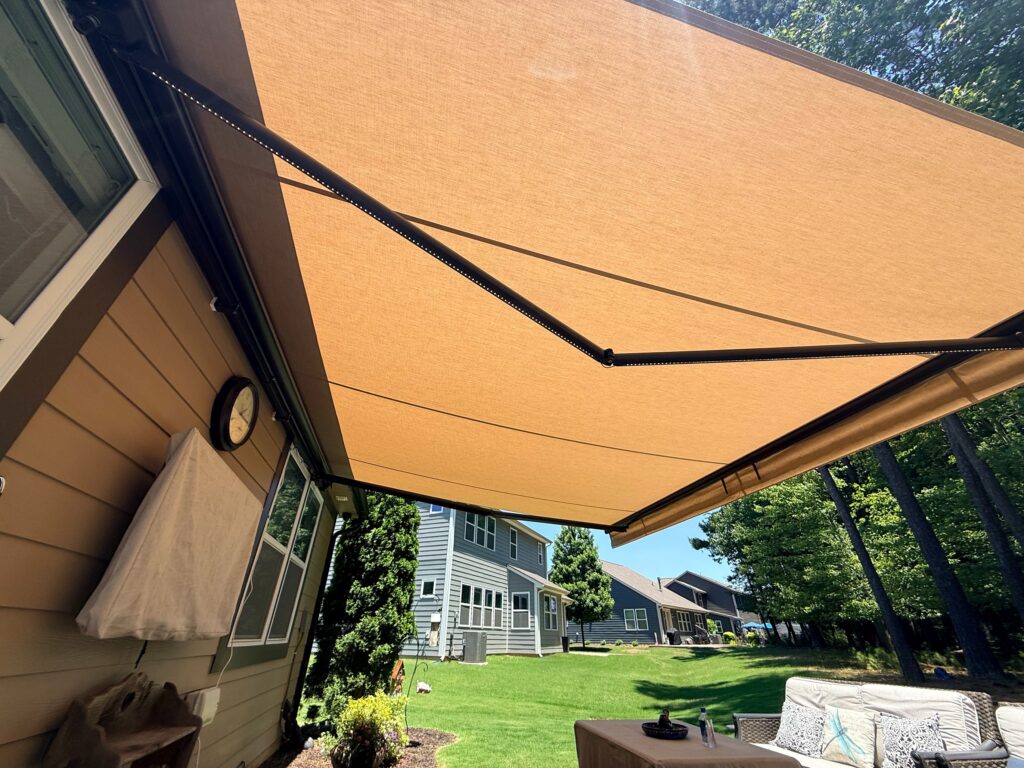
Before comparing colors or control options, look at the area you want to shade. A narrow deck used for morning coffee needs a different solution than a wide patio where a family gathers for weekend lunches. Think about when sunlight reaches the space, where people sit, and whether you need to protect a dining table, outdoor kitchen, sliding doors, or large windows.
Your awning should cover the activity zone, not just the wall behind it. Measure the width of that zone and consider how far the shade needs to extend from your home. That outward reach is called projection. A deeper projection delivers more shade during high sun, but it also requires enough open clearance on the patio and a mounting location that can support the awning properly.
Also consider the sun’s angle. West-facing patios often need generous late-day coverage, while a south-facing patio may benefit from a larger awning that reduces heat during the middle of the day. If low morning or evening sun is the main concern, a retractable valance or additional side shade may be worth discussing.
Choose the Right Size and Mounting Location
A motorized awning is only as dependable as the structure holding it. It must be mounted into solid framing, masonry, or another approved structural surface – never just siding, trim, or an unsupported exterior finish. This is one of the most important reasons to work with an experienced installer or dealer.
Measure the available wall width, but do not stop there. Check the mounting height, the location of windows and doors, downspouts, light fixtures, and roof overhangs. The awning needs enough height to pitch outward for rain runoff while preserving comfortable headroom at the front edge.
A wider awning can make a patio feel more balanced and finished, especially when it aligns with doors, windows, or a defined seating area. Still, bigger is not always better. An oversized projection on a compact patio can crowd furniture circulation, while a shallow model on a large entertaining area may leave guests chasing small patches of shade. The best fit is proportional to both the architecture and the way the space is used.
One Large Awning or Two Smaller Ones?
For broad patios, two coordinated awnings can offer useful flexibility. You might extend one over a dining area while leaving another retracted over a sunny garden-facing lounge. Separate units can also work around a window, column, or other break in the wall.
One larger awning often creates a cleaner visual line and can be simpler to operate. The right choice depends on wall conditions, desired coverage, and how independently you want to control each part of the patio.
Fabric Is About Comfort, Color, and Care
Awning fabric does more than make the space look inviting. It filters UV exposure, reduces glare, and helps limit the heat that reaches doors, windows, and outdoor seating. Quality outdoor fabrics are designed to hold up to sunlight and everyday weather, but color and weave still affect performance.
Darker fabrics usually reduce glare more effectively and can create a more enclosed, shaded feeling. Lighter fabrics keep the area brighter underneath and often complement light-colored siding, stone, or coastal-style outdoor furniture. A stripe can add personality, while a solid neutral can make a large awning feel integrated with the home rather than overly prominent.
Ask about the fabric’s UV protection, water resistance, color retention, and cleaning recommendations. Retractable awnings are intended primarily for sun protection, not for handling heavy rain or standing water. A suitable pitch helps light rain shed, but the awning should be retracted if rain becomes heavy or begins to pool.
For homeowners who want a polished look when the awning is not in use, a cassette-style model is a strong option. A full cassette encloses the fabric and arms when retracted, helping protect them from dirt, debris, and exposure. It can be especially appealing on homes where the awning is visible from upper windows or frequently used outdoor areas.
Select Controls That Match Your Routine
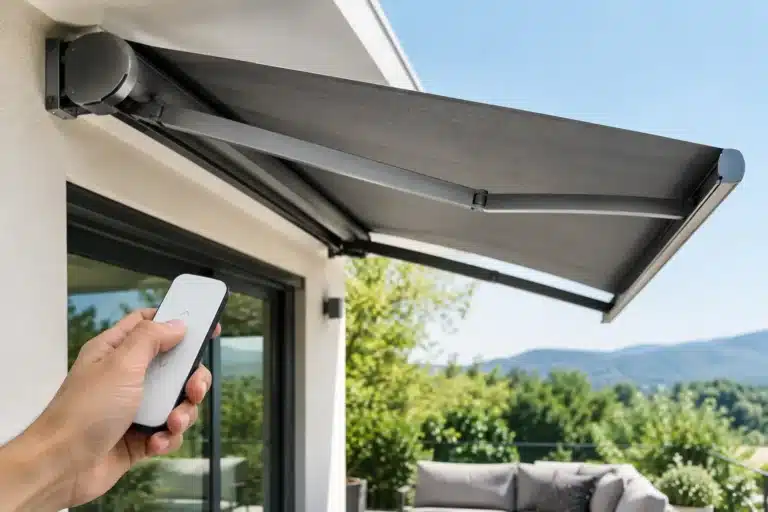
Motorization makes shade easier to use, which means it is more likely to be used. With a wall switch, handheld remote, or smart-home-compatible control, you can extend the awning before guests arrive and retract it without leaving the table.
A basic remote is an excellent choice for many households. It is simple, reliable, and convenient for everyday use. Wall-mounted controls provide a dedicated location near a door, while app-based controls can add scheduling or operation from inside the home. The best option is the one your household will actually use comfortably.
For commercial patios, motorization can help staff adjust several shade areas efficiently throughout the day. Restaurants, clubs, and hospitality properties often benefit from grouped controls that provide a consistent guest experience while allowing designated staff to manage the equipment.
Wind Sensors Are Helpful, Not a Replacement for Attention
A wind sensor can automatically retract an awning when gusts reach a set level. It is a valuable safeguard, particularly for locations with variable weather or for owners who may forget to retract the awning after use. However, a sensor is not a promise that an awning can remain open in severe conditions.
Retractable awnings should be closed during strong winds, storms, snow, or prolonged periods when no one is available to monitor changing weather. Think of the sensor as added protection, not permission to leave the awning extended in every forecast.
Plan for Power Before Installation Day
Motorized awnings need a safe, appropriate power source. Depending on the model and site conditions, this may involve a nearby exterior outlet, concealed wiring, or electrical work coordinated before installation. Discuss this early, especially if you are renovating a patio or building a new outdoor kitchen.
Planning power in advance keeps the finished installation cleaner. It can also prevent a cord location from interfering with doors, walkways, or the overall appearance of the exterior. An experienced shade professional can help identify practical options while keeping the control location convenient.
Do not overlook access for future service. A well-planned installation leaves room to inspect the unit, clean the fabric, and address any maintenance needs without dismantling nearby lighting, planters, or built-in features.
Compare Quality Beyond the Fabric Swatch
It is easy to choose an awning based on color alone, but the frame, arms, hardware, and installation quality deserve equal attention. These components carry the load every time the awning extends and retracts. Look for durable construction, dependable motor components, a clear warranty, and a supplier that can explain what support looks like after the installation.
Price matters, but it should be evaluated alongside the expected lifespan, service availability, fabric quality, and included features. A lower initial price may not represent the better value if it leaves out a protective cassette, wind sensor compatibility, professional installation, or meaningful product support.
At Simpli Shaded, an authorized SunPro dealer in Charlotte, NC, the approach is straightforward: match the product to the space, the climate, and the customer’s expectations rather than forcing a one-size-fits-all answer.
A Motorized Awning Buying Guide for Commercial Spaces
For hospitality venues, outdoor retailers, and commercial property owners, the same fundamentals apply, but operations add another layer. Shade should support guest comfort, circulation, brand presentation, and staff workflow. A restaurant patio may need multiple units that can be controlled by zone, while a poolside lounge may prioritize substantial UV coverage and fabric colors that coordinate with the property.
Commercial property owners should also confirm lead times, available dimensions, replacement fabric options, warranty terms, and dealer support before finalizing a specification. Consistent product catalogs and controlled pricing policies can make planning easier for multi-location projects or design teams managing repeat installations.
Whether the project is one backyard patio or a larger hospitality setting, the most successful awning is the one that fits the space naturally and makes being outdoors feel like the easy choice.
Related on Simpli Shaded: Motorized retractable awnings in Charlotte · Motorized screens · What a motorized awning costs · 0% APR financing for qualified buyers · Areas we serve