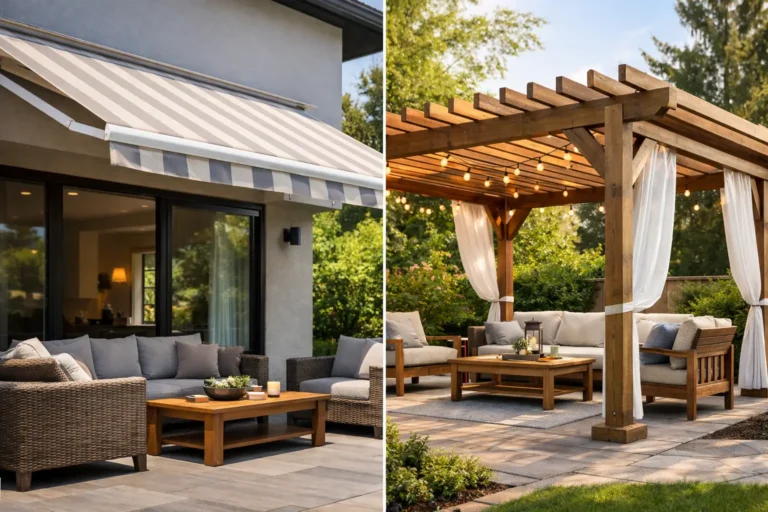
Patio shade solutions for Charlotte homes come down to a short list: motorized retractable awnings for overhead shade, motorized screens for low-angle sun and bugs on a covered porch, and combinations of the two. Each handles heat, glare and weather differently, and each suits a different kind of space. This guide compares the options so you can match the shade solution to the way your patio actually gets used.
For a breakfast nook that gets direct morning sun, a simple umbrella may be all that is needed. For a wide patio that hosts weekend dinners or supports a restaurant service area, a motorized awning or a more substantial structure often delivers better coverage and easier day-to-day use. Start with the experience you want to create, then choose the shade product that supports it.
Start With the Sun, Not the Product
Before comparing colors, fabrics, or frame finishes, watch how sunlight moves across the patio. Note where it lands in the morning, at midday, and in the late afternoon. A patio facing west may be comfortable until late afternoon, when low-angle sunlight cuts underneath a roofline or awning. A south-facing patio may need broad overhead coverage for much of the day.
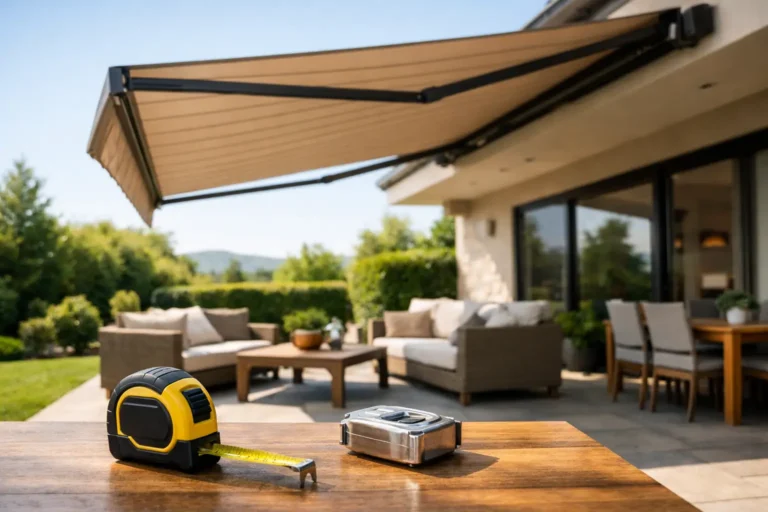
Also consider what needs protection. If the goal is to shade a dining table, measure the area around the table, including the space needed to pull out chairs. If the goal is to cool an entire seating arrangement, measure the full zone rather than the furniture footprint alone. Shade that ends at the edge of a sofa may look adequate on paper but leave guests exposed when the sun shifts.
Wind matters, too. Open, exposed yards and upper-level decks call for products designed to be secured or retracted when conditions change. No fabric shade product should be left open in high winds unless its manufacturer specifically rates it for those conditions.
Patio Shade Solutions for Different Uses
Retractable awnings for flexible everyday coverage
Retractable awnings are a strong fit for patios attached to a home or commercial building. They extend when the sun is high and retract when you want open sky, more light indoors, or added protection during changing weather. This flexibility is one reason motorized awnings work so well for homeowners who use their patio often but do not want a permanent roof over it.
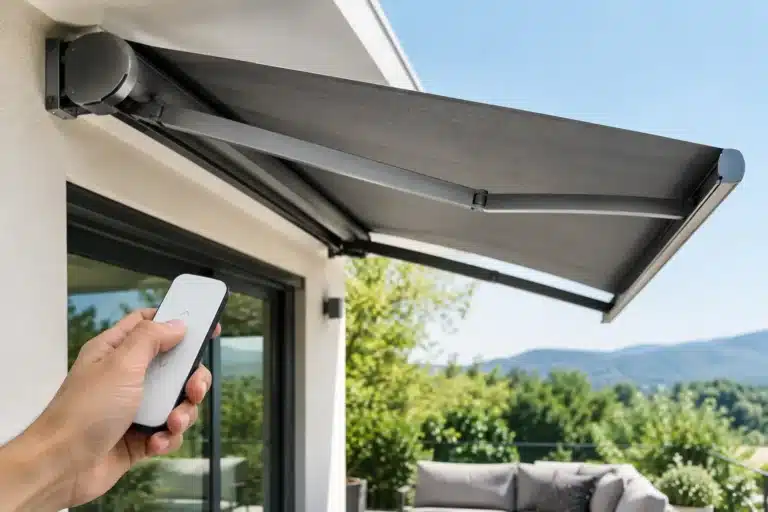
A motorized model makes the routine easy. With the touch of a button, a shaded lunch spot becomes an open-air evening patio. Sensors can also be a practical consideration for some installations, especially where sun exposure is intense or weather changes quickly.
The trade-off is that an awning needs a suitable mounting surface and professional planning. Its projection, mounting height, and placement must work with doors, gutters, lighting, and the patio layout. For broad coverage, a properly sized awning usually feels more polished and useful than trying to place several smaller umbrellas along the house.
Patio umbrellas for targeted, movable shade
Umbrellas are ideal when flexibility and focused coverage matter most. They work well over a small dining set, a pair of lounge chairs, or a poolside seating area. A center-pole umbrella is a familiar option for a table with an umbrella hole, while a cantilever umbrella places the pole off to the side, leaving the space beneath more open.
The key is choosing enough canopy size and enough base weight. A large umbrella with a light base is not a dependable outdoor solution. The base must be matched to the umbrella style, size, and local wind conditions. Tilt features can be especially helpful for late-day sun, but they do not replace proper overhead coverage when the goal is to shade a large area for hours at a time.
Umbrellas also give homeowners and hospitality spaces a simple way to introduce color and visual rhythm. Matching canopies can organize a larger pool deck or dining patio without making it feel overly built-in.
Shade sails for modern overhead coverage
Shade sails offer a clean, architectural look and can cover areas where a wall-mounted awning is not possible. Their tensioned fabric creates distinct lines overhead, making them a popular option for gardens, play areas, detached patios, and poolside spaces.
They are not a one-size-fits-all answer. Successful shade sail installations depend on carefully located attachment points, appropriate tension, and a plan for rainwater runoff. A flat sail can collect water, so its angles need to be designed with drainage in mind. Sails are also less adjustable than retractable awnings or umbrellas. Once installed, the shaded area is largely fixed.
For a homeowner who values a contemporary look and reliable daytime shade, that trade-off may be worthwhile. For someone who wants to adjust coverage throughout the day, an awning or cantilever umbrella may be the better fit.
Pergolas and fixed structures for a defined outdoor room
A pergola or fixed shade structure gives a patio the strongest sense of permanence. It can visually define an outdoor kitchen, dining area, or lounge zone while creating a natural framework for lighting, fans, curtains, or climbing plants. Some designs use slatted roofs, while others pair a structure with retractable fabric or louvered panels for more control over sun and airflow.
This option is best when the patio is becoming a true extension of the home. It generally involves more planning, a larger budget, and attention to local permits or homeowner association requirements. Yet for a frequently used outdoor entertaining area, a well-designed structure can add function and visual value that portable shade cannot match.
Exterior screens for low-angle sun and privacy
Overhead shade alone does not solve every sun problem. When afternoon light comes in from the side, exterior screens can make a major difference. They help reduce glare, soften heat, and add a degree of privacy without closing off the patio completely.
Screens pair especially well with covered patios, pergolas, and commercial outdoor dining areas. They are useful when guests are comfortable under the roof but still squinting into the setting sun. Depending on the fabric openness, they can preserve outward views while filtering harsh light.
Choose Fabric and Color With Real Conditions in Mind
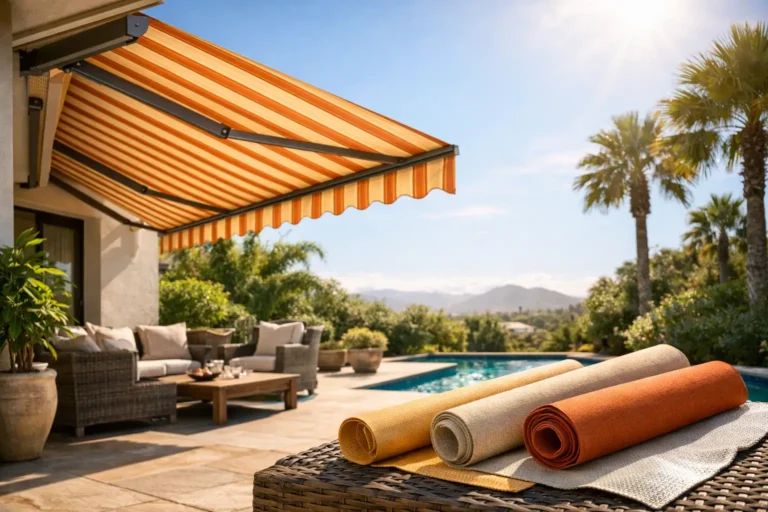
Outdoor shade fabric does more than set the color palette. It affects UV protection, heat reduction, visibility, and maintenance. Look for quality exterior-rated materials that resist fading, mildew, and everyday weather exposure. A fabric’s UV performance is worth considering alongside its appearance, particularly over spaces where children, pets, or guests spend long periods outside.
Darker fabrics can reduce glare effectively and often provide a clearer view outward from beneath the shade. Lighter colors can make a space feel brighter and may coordinate well with lighter siding or furniture. Neither is automatically better. The right choice depends on the patio’s exposure, the surrounding finishes, and whether you want the shade feature to blend in or become a design focal point.
Frame finish deserves the same attention. Neutral tones often coordinate easily with trim, windows, and outdoor furniture. In commercial settings, consistent canopy and frame colors can make a patio feel intentional and aligned with the property’s overall design.
Plan for Daily Use and Long-Term Care
The easiest patio shade solution is usually the one people will actually use. If raising and lowering an umbrella feels like a chore, it may spend more time closed than open. If a manual awning is difficult to reach, motorization can make a meaningful difference. Think about who will operate the product, how often it will be used, and where it will be stored or retracted during storms and winter.
Maintenance is generally straightforward when products are selected for their environment. Brush off leaves and debris, rinse fabric as recommended, and allow it to dry fully before closing or storing it. Inspect hardware, anchors, and moving parts periodically. For retractable systems, keeping the fabric and frame clean helps preserve both appearance and performance.
Commercial property owners should also consider operational consistency. A coordinated shade program makes it easier for staff to open, close, and maintain outdoor areas efficiently. Working with a knowledgeable supplier and dealer network helps ensure products are specified appropriately across multiple locations or seating zones.
Make the Patio Comfortable Enough to Use More Often
A shade purchase works best when it solves a specific problem: a dining table that is too hot at lunch, a deck that lacks privacy, lounge furniture that fades too quickly, or a hospitality patio that loses covers during sunny hours. That practical focus keeps the decision simple.
As an authorized SunPro dealer serving Charlotte, NC, Simpli Shaded approaches outdoor comfort as a matter of matching the right coverage to the way a space is lived in. Measure carefully, account for the changing sun, and choose a solution that feels easy to operate. The result is not just a cooler patio, but an outdoor destination people are genuinely happy to use.
Related on Simpli Shaded: Motorized retractable awnings in Charlotte · Motorized screens · What a motorized awning costs · 0% APR financing for qualified buyers · Areas we serve