Retractable awning or pergola is one of the most common questions Charlotte homeowners ask once a patio gets too hot to use. A pergola is a fixed structure with partial shade; a retractable awning mounts to the house, extends full shade on demand, and rolls away for open sky. They differ in cost, maintenance, storm handling and how they change the look of the home. Here is a side-by-side comparison to help you decide which fits.

Both options can make a deck, patio, pool area, restaurant terrace, or courtyard more comfortable. They do it in very different ways, though. A retractable awning delivers broad, adjustable shade from the side of a building. A pergola creates a defined structure overhead and can become a design feature in its own right. The better choice depends on your weather, layout, budget, and how often you want to use the space.
Retractable Awning vs Pergola: The Core Difference
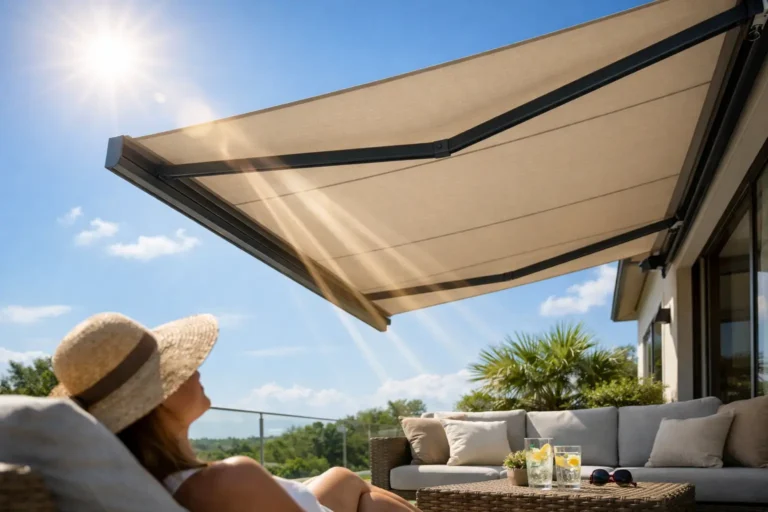
A retractable awning is mounted to a wall, roofline, or other suitable supporting surface. Its fabric canopy extends outward when you need protection from direct sun and retracts into its cassette or housing when you want an open sky. Motorized models make this especially easy: a button, remote, or smart control can turn a hot patio into a comfortable place to sit in moments.
A pergola is a freestanding or attached framework, typically made from aluminum, wood, vinyl, or steel. Traditional pergolas have open slats overhead, which provide filtered light but not full shade or reliable rain coverage. Modern versions may use fixed canopy panels, retractable fabric, or adjustable louvers to offer more control.
That distinction matters. An awning is primarily a shade system. A pergola is primarily a structure that may include a shade system. If your first goal is fast relief from direct sun, an awning is often the simpler answer. If you want to establish a destination in the landscape, frame an outdoor kitchen, or create a permanent gathering zone away from the house, a pergola may be worth the added investment.
When a Retractable Awning Makes More Sense
Retractable awnings are a natural fit for patios and decks directly beside the home. They cover the area where most people already place a dining table, lounge chairs, or grill, and they can help reduce glare and heat coming through nearby windows and doors.
The greatest advantage is flexibility. On a clear morning, you may want sunlight on the patio. By lunch, you may want a cool place for family, guests, or customers. An awning lets you choose. When it is retracted, it preserves open views, avoids blocking stargazing, and keeps the home exterior from feeling permanently covered.
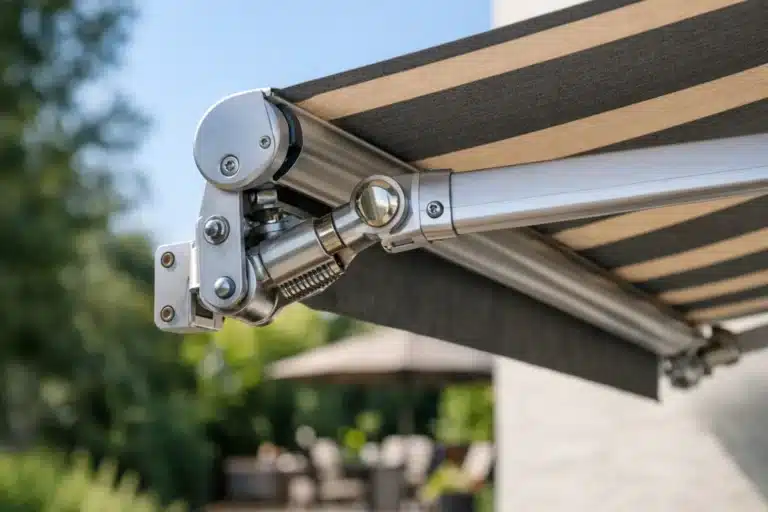
Motorization adds practical value, particularly for larger awnings. Instead of using a hand crank, homeowners can extend coverage quickly when the patio gets hot. Wind sensors can also be a useful upgrade in exposed locations, automatically retracting the awning when wind conditions rise beyond a safe level.
Awnings are also generally less involved to install than a pergola because there are no posts or footings taking up patio space. That can be helpful on compact decks, narrow side patios, and commercial storefronts where every square foot matters. The correct mounting surface is essential, however. A qualified installer should confirm that the wall, roof structure, and fasteners can support the awning properly.
What an awning does not do as well
Even a high-quality retractable awning is not a permanent roof. It should be retracted during strong winds, severe storms, and when snow or ice could accumulate. It also does not provide much protection from low-angle sun coming in from the sides, though optional side screens or thoughtful furniture placement can help.
An awning works best where there is a suitable building attachment point. If the seating area sits in the middle of a large yard, beside a pool, or at the far end of a garden, an attached awning may not reach it.
When a Pergola Is the Better Investment
A pergola is often chosen for presence as much as shade. It adds vertical lines, visual structure, and a sense of enclosure that can make a patio feel more like a finished room. For homeowners planning a larger outdoor renovation, it can anchor a dining area, outdoor kitchen, fire feature, or poolside lounge area.
Because it stands on posts, a pergola can be placed where an awning cannot. It can cover a detached patio, define a garden seating area, or create a hospitality space that is not adjacent to the main building. For restaurants, resorts, and event venues, that placement freedom can be a deciding factor.
A pergola can also accommodate several comfort upgrades. Lighting, fans, curtains, heaters, climbing plants, and shade panels can all be incorporated into the structure. A louvered pergola provides the most control, with roof slats that can rotate to admit light, create shade, and, when closed, direct rainwater into an integrated drainage system.
The shade and weather question
Not every pergola provides the same result. A classic open-slat pergola creates attractive dappled shade, but the sun still moves through the openings. It may look inviting in photos while offering limited relief during the hottest part of the day.
If dependable shade is the goal, choose a pergola with a retractable canopy, fixed cover, or adjustable louvers. If rain protection is a priority, confirm that the roof system is designed for it. Fabric canopies vary in water resistance, and fixed or louvered roofs need proper drainage. A basic open pergola should not be treated as a rain shelter.
Cost, Installation, and Long-Term Upkeep
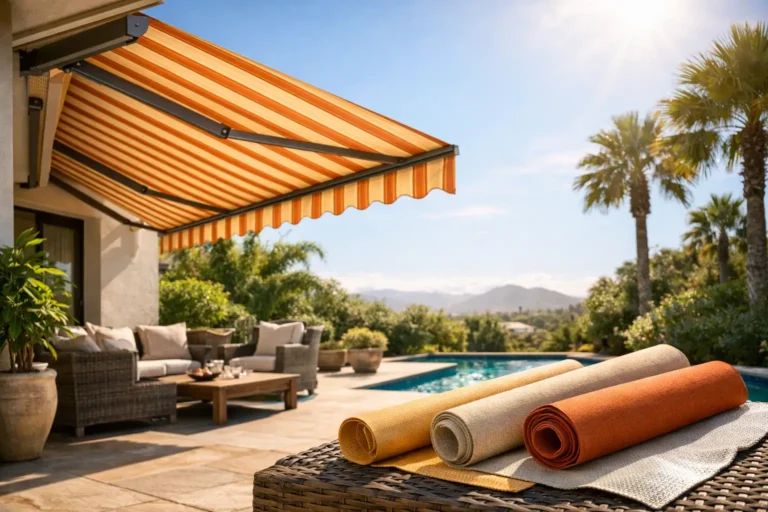
A retractable awning usually has a lower starting cost than a pergola because it requires less material, labor, and site work. The final price still varies with width, projection, fabric, motorization, sensors, installation conditions, and whether the awning is fully enclosed in a protective cassette.
Pergolas typically cost more because they involve posts, beams, foundations or footings, and more extensive assembly. Custom sizes, premium finishes, louvered roofs, electrical work, and drainage systems increase the project scope. Depending on your location and design, permits or homeowner association approval may also be required.
Maintenance is different rather than entirely easier with one option. Awning fabric should be kept reasonably clean and dry before long-term storage. The frame and moving parts benefit from periodic inspection, and the awning should be used according to wind recommendations.
A pergola requires attention to its structural material. Wood may need sealing, staining, or repainting over time. Aluminum and vinyl generally require less routine care, though they should still be cleaned and inspected. Louvered systems add moving components and drainage channels that need occasional cleaning to perform as intended.
How Your Climate Changes the Decision
In sunny, warm climates, a retractable awning can provide the daily shade a patio needs without making the area feel closed in year-round. Retracting it during cooler months lets the sun warm the home-facing outdoor space again.
In areas with frequent wind, an awning can still work well, but careful product selection, professional installation, and proper use are essential. A pergola may feel more substantial, yet its roof system also needs to be rated and installed for local conditions. Neither option should be chosen without considering wind exposure, storm patterns, and snow loads.
Rain is another dividing line. A standard awning can shed light rain when set at the appropriate pitch, but it is not intended to handle pooling water or harsh weather. A well-designed louvered pergola offers more dependable rain management, making it attractive for homeowners who want to use an outdoor kitchen or dining area in more variable conditions.
Choose Based on How You Live Outside
Think about the patio at the moment you most want to use it. If you picture a quick, cool retreat outside the back door for breakfast, lunch, or evening drinks, a motorized retractable awning is hard to beat. It supplies generous overhead shade without adding posts or a permanent roofline to the view.
If you picture a defined outdoor room with lighting, a fan, furniture, and a destination feel, a pergola may better suit the project. It is particularly compelling for detached spaces or full backyard redesigns where architecture and landscape need to work together.
For commercial property owners, the same logic applies at a larger scale. Retractable awnings can create adaptable shade at storefronts, cafés, and guest patios, while pergolas can establish an elevated dining or lounge zone. In either case, consistent sizing, durable finishes, and dependable product support matter as much as appearance.
The best shade solution is the one that makes you use your outdoor space more often. Start with the sun path, your weather exposure, and the location of the area you want to cover. From there, choosing between flexible coverage and a permanent outdoor structure becomes much simpler.
Related on Simpli Shaded: Motorized retractable awnings in Charlotte · Motorized screens · What a motorized awning costs · 0% APR financing for qualified buyers · Areas we serve