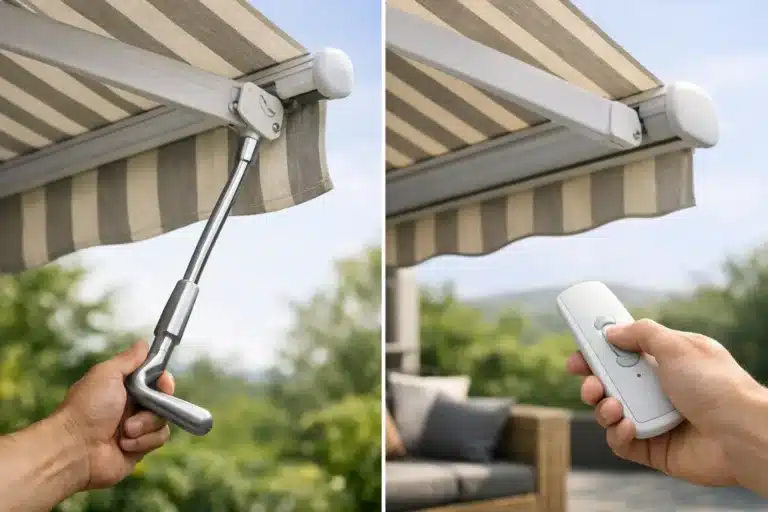
A sunny patio can turn windy faster than most homeowners expect. A retractable awning wind sensor gives a motorized awning the ability to react when you are not nearby, sending it back to its protected position when gusts become too strong. For a shade system designed to make outdoor time more comfortable, that added protection can be a very practical investment.
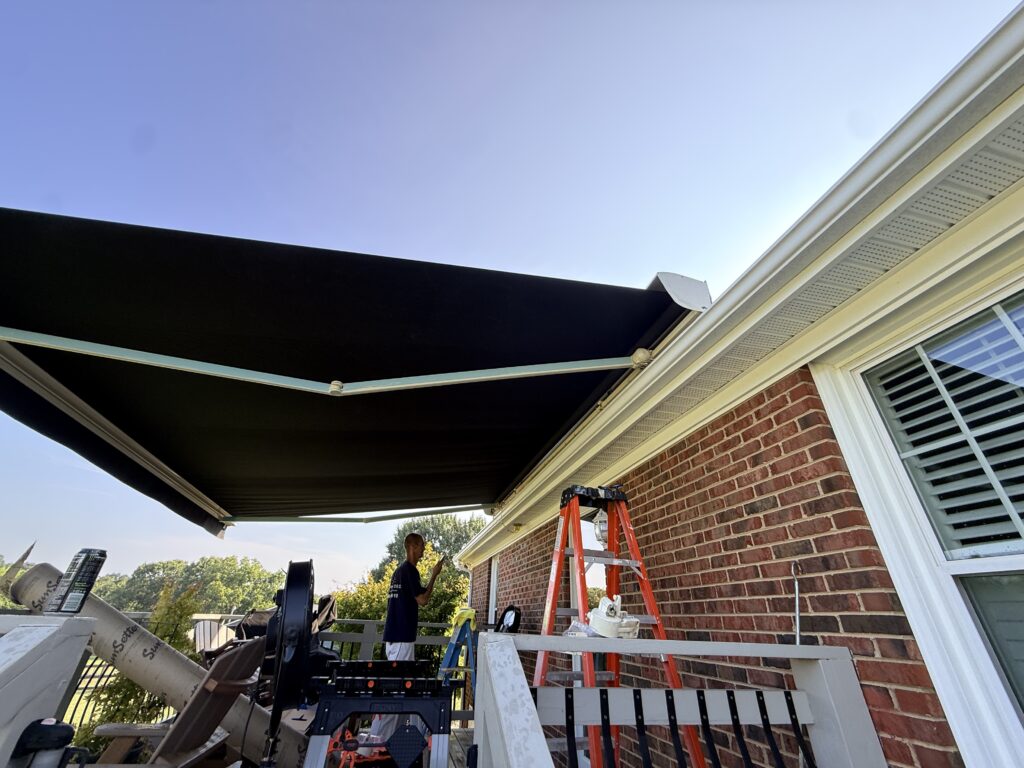
Retractable awnings are built for shade, not for standing up to sustained wind. The fabric catches air, and the extended frame creates leverage against the mounting wall. A brief breeze may be perfectly manageable, but sharp gusts can place stress on the arms, front bar, fabric, and mounting hardware. A wind sensor helps reduce that risk by taking the decision out of your hands when conditions change quickly.
What Does a Retractable Awning Wind Sensor Do?
A wind sensor monitors movement or wind speed and communicates with a compatible motorized awning. When wind reaches the sensor’s set threshold, the awning retracts automatically. Depending on the system, the sensor may operate through a wireless connection, a hardwired connection, or an integrated motor-control system.
The goal is straightforward: protect the awning before a gust has time to cause trouble. This is especially useful for patios that sit behind the house, second-story decks, vacation homes, or commercial outdoor areas where staff cannot always watch the weather.
Some sensors measure wind speed directly. Others detect vibration or motion in the awning’s front bar. Both approaches can work well, but the right choice depends on the awning model, site conditions, and how exposed the outdoor area is.
Why Wind Protection Matters for Retractable Awnings
An extended awning creates a polished, comfortable place to dine, relax, or host guests. It also has a larger surface area exposed to the elements. Wind can lift and twist the fabric, pull on the frame, or cause the awning to move in ways it was not designed to handle.
Retracting the awning during windy conditions protects more than the fabric. It helps preserve the arms and mechanical components that allow the shade to open smoothly day after day. It can also help avoid unexpected service calls and interruptions during the outdoor season.
For commercial patios, this matters even more. A restaurant, clubhouse, or hospitality venue may have several awnings extending over guest seating. Automatic wind protection provides an added layer of consistency when the weather changes during a busy service period.
That said, a sensor is not a replacement for good judgment. If severe weather is expected, retract the awning early and keep it closed until conditions settle. Wind sensors are designed to respond to changing conditions, not to make an awning suitable for storms, snow loads, or extreme weather.
Is a Wind Sensor Right for Your Patio?
For many motorized awning owners, the answer is yes. The value is highest when the awning is frequently left open, the patio is exposed, or the homeowner is often away from home. It is also a smart option for anyone who wants fewer things to remember when entertaining or moving between indoor and outdoor spaces.
A wind sensor is particularly worth considering if your home is in an area known for afternoon thunderstorms, coastal breezes, open-yard gusts, or rapidly changing seasonal weather. Even a sheltered patio can experience strong bursts of wind as air moves around rooflines, fences, and neighboring homes.
The decision is less clear for a very protected courtyard where the awning is only extended while someone is present. In that situation, a homeowner who consistently retracts the awning after use may prefer to keep the setup simple. Still, convenience has value. Automatic protection can provide welcome peace of mind, particularly for a premium outdoor shade investment.
Choosing the Right Sensor for a Motorized Awning
Compatibility comes first. Not every retractable awning wind sensor works with every motor, remote, or control system. Before choosing an accessory, confirm that it is approved for your specific awning and motor configuration. A properly matched sensor should work reliably with the system’s normal controls rather than creating a complicated workaround.
Wind-Speed Sensors
Wind-speed sensors typically use a small outdoor unit to measure airflow. When the selected speed is reached, the unit signals the awning to retract. This option is useful for exposed decks, poolside patios, rooftops, and commercial settings where direct wind conditions are a major concern.
Placement matters. If the sensor is mounted in a location blocked by a wall, roof overhang, or tall landscaping, it may not detect the same wind affecting the awning. On the other hand, placing it in an unusually exposed spot can cause the awning to retract more often than necessary.
Vibration Sensors
Vibration sensors detect movement in the awning itself, often at the front bar. When wind causes the awning to shake beyond the selected setting, it retracts. These sensors can be a clean, convenient solution because they respond to movement where it matters most.
They may be especially useful on patios with variable airflow, where wind speed at a nearby wall does not always reflect what the extended awning is experiencing. However, movement from nearby activity, a loose component, or an overly sensitive setting can sometimes trigger unwanted retraction. Proper installation and adjustment make a difference.
Setting the Sensitivity Without Creating Frustration
The best wind setting is not always the lowest one. If the sensor is too sensitive, the awning may retract during mild breezes that would otherwise make the patio pleasant. If it is set too high, the awning may remain extended longer than is comfortable or advisable.
Start with the manufacturer’s recommended setting and consider your specific site. A wide awning on an open deck may need a more cautious setting than a smaller awning under a covered porch. Observe how the awning behaves through a few normal weather changes, then make small adjustments if your system allows it.
Keep in mind that local forecasts do not tell the whole story. A weather app may show moderate wind for your area while a gust channel between homes creates stronger airflow across your patio. The way wind moves around your property is often the most useful guide.
Installation and Everyday Care
A qualified installer can position the sensor appropriately, pair it with the awning controls, and test the automatic retraction function. This is particularly helpful for larger awnings, multi-awning installations, and commercial projects where dependable operation matters every day.
Once installed, check the sensor as part of routine awning care. Keep it free of leaves, insect nests, and debris. Confirm that batteries are fresh if the unit is wireless, and test the retraction feature at the beginning of the outdoor season. If the awning begins retracting unexpectedly or does not respond during a test, have the controls and sensor reviewed before relying on them.
It is also wise to make sure everyone in the household understands that the awning can move automatically. Keep furniture, planters, and decorations positioned so they do not interfere with the awning’s closing path. For businesses, staff should know how to operate the manual controls and what to do if weather conditions require closing outdoor seating.
A Small Upgrade That Protects a Bigger Investment
A motorized awning already makes it easier to create a cooler, more usable outdoor destination. Adding automatic wind protection supports that convenience by helping the awning respond to one of the outdoor conditions that matters most.
As an authorized SunPro dealer serving Charlotte, NC, Simpli Shaded knows that the best outdoor products are the ones that fit naturally into everyday life. Choose a compatible sensor, set it thoughtfully, and let your patio shade do more of the work while you enjoy the space beneath it.
Related on Simpli Shaded: Motorized retractable awnings in Charlotte · Motorized screens · What a motorized awning costs · 0% APR financing for qualified buyers · Areas we serve