In the Charlotte area, a motorized retractable awning typically costs about $3,000 to $7,000 installed, depending on width, projection, fabric and options such as LED lighting and a wind sensor. That range covers most residential patios; unusually wide spans, structural work or add-ons push it higher. This article breaks down what drives the price, what is included in a professional installation, and how financing changes the monthly cost.
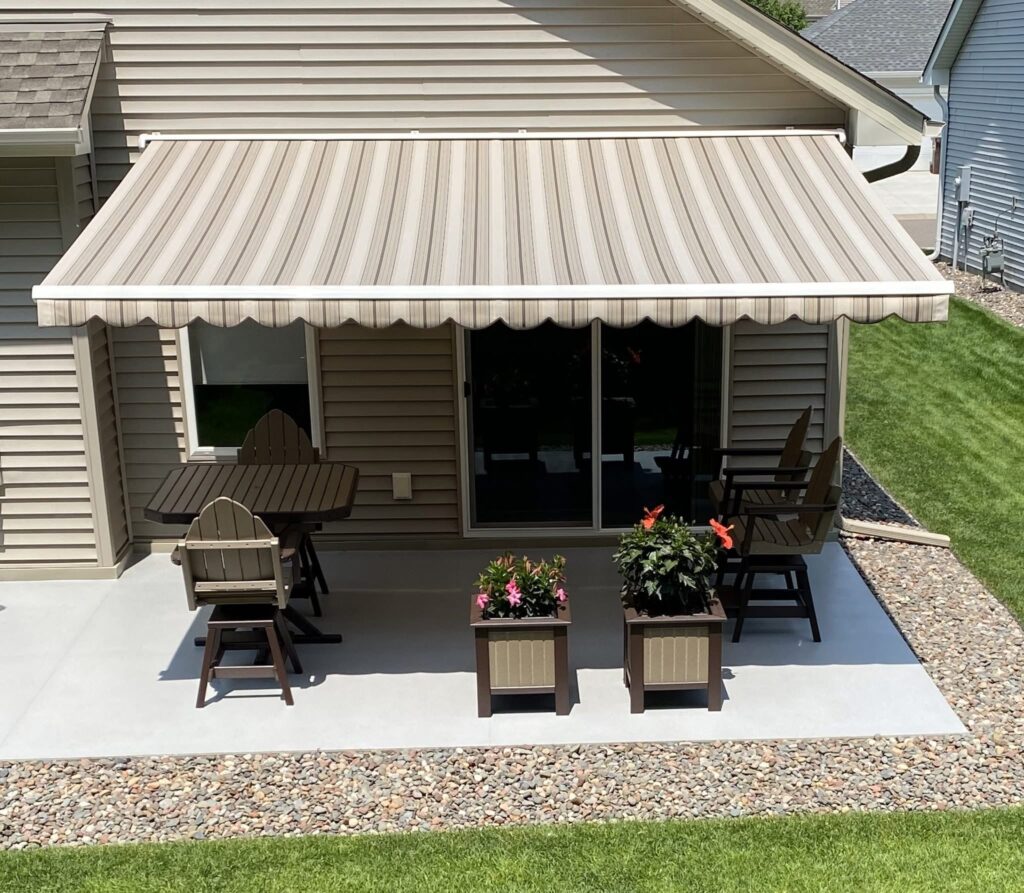
For homeowners, a motorized awning is often a practical upgrade that makes a deck, patio, or poolside seating area more comfortable for more of the day. For restaurants, clubs, and hospitality spaces, it can help turn exposed outdoor seating into a polished, usable amenity. The best budget starts with the right expectations about what is included and what your space requires.
Typical Motorized Awning Cost Installed
In the Charlotte area, most professionally installed motorized retractable awnings from Simpli Shaded run about $3,000 to $7,000 installed. That is a broad range because an 8-foot awning over a straightforward patio is a very different project from a wide, custom-fabricated system covering a commercial terrace.
A smaller motorized awning usually lands near the low end of that range, around $3,000 to $4,000 installed, when the wall is sound, the mounting height is accessible, and nearby power is available. These projects usually involve common residential sizes, standard fabric selections, basic motorized operation, and uncomplicated installation conditions.
For many homeowners, a mid-size awning with a wind sensor or LED lighting is closer to $4,000 to $6,000 installed. This is where larger widths, longer projections, upgraded fabrics, wind sensors, remote controls, and more tailored color coordination often come into the picture. A 10-by-12-foot or 12-by-12-foot awning can provide meaningful coverage for a dining table, lounge area, or seating arrangement without permanently closing off the patio.
The widest spans and fully loaded systems reach the top of the range, around $7,000 installed. These may include expansive widths, multiple units placed side by side, higher-end cassette protection, specialty fabrics, integrated lighting, automation, or more demanding mounting and electrical work. Commercial installations are typically quoted individually because structural conditions, local requirements, access, and coverage needs vary significantly.
These ranges are useful planning figures, not a substitute for a site-specific quote. A lower upfront price may exclude professional installation, delivery, electrical work, or the accessories needed to make the awning perform well in the space.
Motorized Awning Cost Installed: The Main Components
Size and projection
Size is usually the biggest driver of cost. Width measures the horizontal span along the wall, while projection describes how far the awning extends outward. Both affect the amount of frame material, fabric, hardware, and labor involved.
It is tempting to choose the largest possible awning, but the most effective size is one that shades the area you actually use. A shallow projection may cover a doorway but leave the dining area exposed. An oversized system can add cost without improving the layout. Consider where people sit, where the sun hits at the hottest time of day, and whether the awning needs to clear doors, windows, grills, or outdoor furniture.
Fabric, frame, and protective features
Quality outdoor fabric does more than add color. It helps manage glare, heat, and UV exposure while setting the visual tone for the patio. Standard solids and stripes tend to be more budget-friendly than designer patterns or specialty materials, but fabric quality should not be treated as an afterthought. It is constantly exposed to sunlight, moisture, pollen, and changing weather.
Frame construction matters just as much. A well-built retractable awning needs stable arms, durable hardware, and a finish designed for exterior use. Some models include a cassette or hood that protects the fabric and moving parts when retracted. This feature can raise the price, but it can be worthwhile in areas with frequent rain, debris, coastal air, or long periods of seasonal storage.
Motor, controls, and sensors
Motorization adds convenience, especially for a large awning that would be cumbersome to operate by hand. At the simplest level, this may mean a wall switch or handheld remote. More advanced options can include smartphone control, timers, sun sensors, or wind sensors.
A wind sensor is one of the most valuable upgrades for exposed patios. Retractable awnings are shade products, not all-weather roofs, and strong wind can damage an extended unit. An automatic sensor can retract the awning when conditions change, though it should support good judgment rather than replace it. If storms are expected or the property will be unattended for an extended period, retracting the awning remains the sensible choice.
Installation and site conditions
Professional installation is where a quote becomes highly specific. Installers need to confirm that the mounting surface can safely support the awning. Brick, masonry, wood framing, stucco, siding, and concrete each require a different approach. If the wall has hidden structural limitations, uneven surfaces, or insufficient backing, additional preparation may be necessary.
Access also affects labor. A ground-level patio with clear workspace is more straightforward than a second-story deck, a tight side yard, or a location that requires special equipment. Removing an existing awning, repairing damaged fascia, or working around gutters and exterior fixtures can add time and cost.
Electrical work is another common variable. If a weather-protected outlet is already nearby, connecting a motorized awning may be simple. If a new circuit, exterior outlet, conduit, or professional electrical connection is needed, plan for an added expense. Depending on the distance and complexity, electrical work can range from a few hundred dollars to well over $1,000.
How to Compare Awning Quotes Without Guesswork
When comparing estimates, look beyond the final price. Ask whether the quote includes the awning, delivery, mounting hardware, installation labor, control options, sales tax, and electrical work. If electrical work is not included, clarify who is responsible for it and what type of power connection the product requires.
It also helps to confirm the exact awning dimensions, projection, fabric collection, frame color, motor type, and warranty coverage. Two quotes that appear similar can represent very different products. One may include a protective cassette and wind sensor, while another may be a more basic open-frame unit with manual safety steps.
For homeowners, a site measurement before ordering is especially valuable. It helps avoid costly surprises involving mounting height, window clearance, roof overhangs, and door swing. For designers and commercial property owners, a documented specification keeps the product selection aligned with the project’s appearance, seating plan, and operational needs.
A specialist can also help determine whether one wide awning or two smaller units makes more sense. Two units may offer flexible shade control across separate seating zones, while one larger system can create a cleaner visual line. There is no universal right answer. The better choice depends on the facade, the sun pattern, and how the outdoor area is used.
Where It Makes Sense to Spend More
The upgrades that tend to matter most are the ones that protect the awning, improve daily usability, or solve a real comfort problem. A better fabric can make the patio more pleasant during intense sun. A cassette can help preserve the system when retracted. A wind sensor can offer extra peace of mind on an open deck. A reliable motor and well-planned electrical connection make shade easy to use rather than another task to manage.
By contrast, paying for unnecessary width, features that will not be used, or a pattern that clashes with the home can diminish the value of the investment. A motorized awning should feel like it belongs with the home’s exterior, from its frame color to its fabric and scale.
At Simpli Shaded, the goal is to make this selection process more straightforward: choose shade that fits the space, the way it is used, and the conditions it faces. Thirty years of industry experience reinforces a simple point: the right awning is not merely the one with the lowest installed price. It is the one that gives people a comfortable reason to stay outside.
Before setting a budget, stand on the patio at the time of day you most want to use it. Notice where the heat, glare, and sun exposure actually fall. That view will do more to guide the right motorized awning than a price range ever could.
Related on Simpli Shaded: Motorized retractable awnings in Charlotte · Motorized screens · What a motorized awning costs · 0% APR financing for qualified buyers · Areas we serve