Homeowners in the Charlotte area usually land on two options when a patio gets too hot to use: a fixed canopy that stays up year-round, or a retractable awning that extends when you need shade and disappears when you don’t. Both block sun. They differ in cost, how they handle storms, what they do to the look of the house, and how much light reaches the rooms behind the patio. This guide walks through those differences so you can pick the one that fits your home.

Both options create more comfortable, polished outdoor destinations. A retractable awning gives you shade when you want it and open sky when you do not. A fixed canopy provides dependable, always-ready coverage with a more permanent architectural presence. The better choice comes down to how you use the space, what weather your property sees, and how much flexibility matters to you.
Retractable awnings versus fixed canopies: the key difference
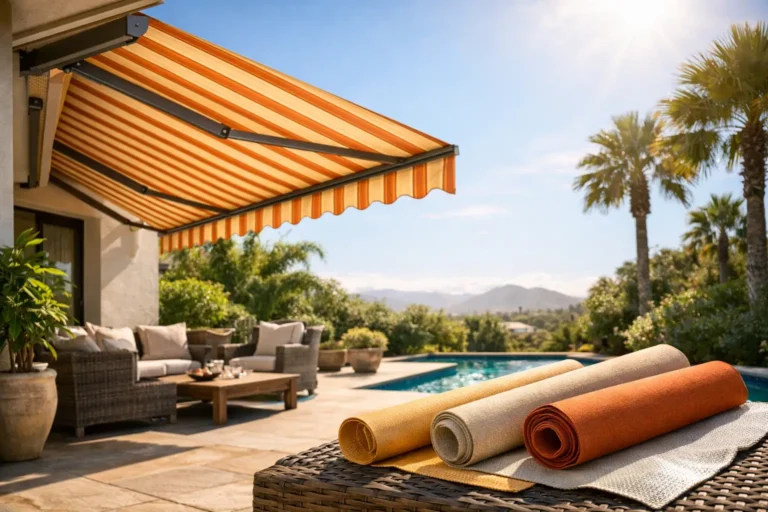
A retractable awning extends from a building to shade a patio, deck, terrace, or storefront. It can be manually operated, but motorized models make daily use especially easy. With the touch of a button, you can extend coverage for lunch outdoors, then retract the awning to enjoy a clear evening sky.
A fixed canopy stays in place year-round. It may attach to the building or stand independently over a patio, entrance, poolside seating area, or commercial outdoor dining space. Its frame and cover are designed as a permanent shade structure rather than a movable one.
That distinction affects everything from your view and light levels to maintenance and installation planning. Neither is universally better. Each serves a different outdoor-living goal.
When a retractable awning makes more sense
Retractable awnings are a strong fit for homeowners who want their patio to feel flexible rather than enclosed. On a warm summer afternoon, an extended awning can reduce direct sun exposure and make seating, grilling, and entertaining more comfortable. When cooler weather arrives, retracting it allows more natural light to reach adjacent windows and doors.
This flexibility is especially valuable for patios that receive strong sun only during certain hours. Rather than living under shade all day, you can adjust coverage as the sun moves. A motorized awning makes that adjustment simple enough to become part of your routine, whether you are heading outside with coffee or preparing for guests.
Retractable systems also preserve the open look of a deck or patio. Because there are no front support posts in many wall-mounted designs, they can keep sightlines clearer than a permanent structure. That matters if your outdoor space overlooks a garden, pool, lake, or landscaped backyard.
For commercial settings, retractable awnings offer practical flexibility too. A restaurant terrace can provide shade during lunch service, then open up for an evening atmosphere. Retail storefronts can use coordinated awnings to create a more welcoming facade while helping protect windows and outdoor displays from direct sunlight.
The trade-offs of retractable shade
A retractable awning needs a suitable mounting surface and professional attention to sizing, placement, and installation. It should be secured to a structurally sound wall or header, not simply attached to siding or trim.
It is also not intended to be left extended through high winds, heavy rain, snow, or severe weather. Many owners pair motorized awnings with wind sensors that automatically retract the unit when conditions become risky. This protection helps preserve the fabric, arms, and mounting system while taking some guesswork out of daily use.
The fabric may need periodic cleaning, and moving components benefit from routine inspection. Those are manageable responsibilities, but they are part of owning a shade system that moves. If you want coverage that stays in place without daily decisions, a fixed canopy may be a better match.
When a fixed canopy is the better choice
A fixed canopy is designed for spaces that need reliable coverage every day. Think of a backyard seating area used throughout the season, a poolside lounge zone, an apartment community courtyard, or a hotel patio that needs a consistent guest experience.
Because the structure is permanent, it can create a true outdoor room. It defines a destination, gives furniture a natural home, and can make a large or exposed patio feel intentionally designed. For properties where the goal is a stable, always-shaded gathering area, that certainty is appealing.
Fixed canopies can also be useful where a retractable awning is not practical. A freestanding canopy can shade an area away from the home, such as a garden seating area or pool deck. It can also suit buildings without an appropriate wall for a retractable system.
In commercial applications, permanent coverage can support more predictable operations. A hospitality venue may need shaded tables ready when doors open. A fixed structure can establish a recognizable outdoor dining or waiting area without requiring staff to extend and retract it each day.
The trade-offs of permanent coverage
The primary compromise is simple: the shade is always there. That can limit sunlight inside nearby rooms and change the feel of the patio during cooler months. If you enjoy sunbathing, stargazing, or an unobstructed backyard view, a fixed roofline may feel more restrictive than a retractable option.
Permanent structures generally involve more planning as well. Depending on the design, local requirements, and property conditions, you may need permits, approvals, footings, or more extensive installation work. Homeowners association rules can also influence canopy size, material, color, and placement.
A fixed canopy has a durable frame, but its cover still needs care. Leaves, debris, standing water, and seasonal weather can affect the material over time. Choosing a design that suits your local climate is essential, particularly in areas with frequent snow, wind, or heavy rainfall.
Compare the features that affect daily use
The most useful comparison is not about product labels. It is about what happens on an ordinary day outside.
Control and flexibility: Retractable awnings are the clear choice when you want to decide between sun and shade. Fixed canopies provide no adjustment, but they deliver immediate coverage without operation.
Weather habits: A fixed canopy is always present, while a retractable awning should be retracted in challenging weather. In areas with frequent wind or storms, a motorized retractable model with weather-responsive controls can be helpful, but it still needs responsible use.
Light inside the home: Retractable awnings allow you to shade outdoor seating while preserving the option for more daylight indoors. Fixed structures can noticeably reduce direct sunlight near the covered side of the home.
Design impact: A retractable awning has a cleaner, lower-profile look when closed. A fixed canopy makes a stronger architectural statement and can visually organize a larger outdoor area.
Budget and installation: Costs vary widely based on size, materials, controls, site preparation, and installation needs. In general, fixed structures may require a larger construction commitment, especially when footings, drainage, or permits are involved. A well-made motorized awning is also a meaningful investment, particularly at larger widths or with smart controls and sensors.
Start with your outdoor routine, not the product
Before choosing a system, pay attention to how your space is actually used. Notice when direct sun reaches the patio, where people naturally sit, and whether heat or glare is the main problem. A small breakfast patio may need shade only in the morning. A west-facing deck may need broad afternoon coverage. A restaurant seating area may need dependable protection for every service period.
Measure the usable area, not just the edge of the house. Consider door swings, grill placement, furniture layout, outdoor kitchens, and walkways. Shade should make the space easier to use, not force everyone to rearrange around posts, walls, or low clearances.
Color matters, too. A fabric or canopy finish should complement the home or commercial facade, but it should also support comfort. Lighter colors often create an airy appearance, while darker colors can reduce glare and create a more defined outdoor ceiling. The right choice depends on the architecture, sun exposure, and atmosphere you want to create.
A practical choice for homes and hospitality spaces
For many homeowners, a motorized retractable awning is the right answer when they want quick comfort without giving up open-sky living. It is particularly effective over patios and decks attached to the home, where flexible shade can make everyday outdoor time more enjoyable.
A fixed canopy is often the better investment when permanent coverage is the goal, the space is detached from the building, or daily shade is essential for the way the property operates. It can turn an exposed area into a dependable destination for guests, family, or customers.
With more than three decades of exterior-shade expertise, Simpli Shaded sees the best results when the product follows the lifestyle. Choose the shade solution that makes it easier to linger outside, welcome guests, and enjoy the space you already have.
Related on Simpli Shaded: Motorized retractable awnings in Charlotte · Motorized screens · What a motorized awning costs · 0% APR financing for qualified buyers · Areas we serve