Charlotte summers are hard on awning fabric. Ninety-degree afternoons, high humidity, pop-up storms and months of direct UV will fade, stretch or mildew the wrong material within a few seasons. The right fabric keeps its color, sheds water and blocks heat for years. This guide explains what separates good awning fabrics from cheap ones and how to choose a color and weave that suits a hot, humid climate.
For homeowners, that may mean lunch on the patio without retreating indoors. For restaurants, resorts, and other commercial spaces, it can mean more comfortable guest seating during the busiest hours of the day. Fabric matters as much as frame design because it is the part of the awning doing the daily work against sun, heat, wind, and weather.
What Hot-Climate Awning Fabric Needs to Do
Heat is only one part of a hot-weather installation. A good fabric also needs to manage intense sunlight, frequent UV exposure, sudden rain in some regions, and color fading over time. The best choice is not always the thickest or darkest material. It is the fabric that offers the right balance of shade, airflow, durability, and design for the way the space is used.
Start with UV protection. A quality exterior awning fabric should block a substantial amount of the sun’s harmful rays. This helps protect people beneath the awning, but it also reduces the fading and wear that sunlight can cause to patio cushions, wood finishes, outdoor rugs, and flooring.
Heat management comes next. When an awning shades a window, door, or glass wall before sunlight reaches it, it can reduce solar heat gain inside the home or business. Over a patio or deck, it cuts direct sun exposure so surfaces and seating stay more comfortable. That is why an exterior shade solution can feel more effective than interior window coverings during peak sun.
Finally, choose a fabric made for exterior life. Indoor-grade materials and lightweight decorative textiles may look appealing at first, but they are not built for extended exposure to heat, moisture, and UV rays. Look for purpose-built awning fabric with colorfast performance and a finish that stands up to regular outdoor use.
The Best Awning Fabrics for Hot Climates
For most residential and commercial awnings, solution-dyed acrylic is a leading choice. The color is built into the fiber rather than applied only at the surface, which helps the fabric retain its appearance under strong sunlight. It is also breathable, an important advantage in hot climates. Breathability allows warm air beneath the awning to rise and escape instead of becoming trapped overhead.
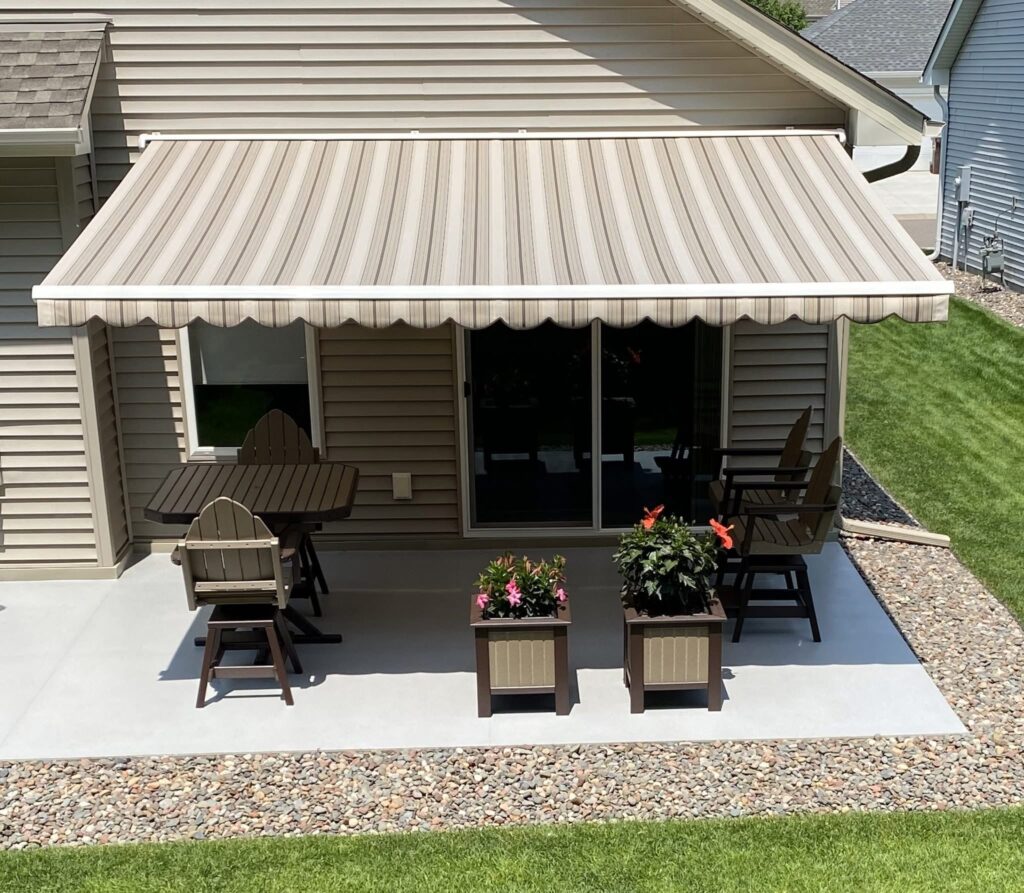
Acrylic fabrics are available in a broad range of solids, textures, and stripes, making them a practical fit when style matters as much as performance. A soft neutral can complement a modern exterior, while a classic stripe can bring character to a poolside seating area or café terrace. With proper care, quality acrylic fabric offers the polished look homeowners want and the dependable performance commercial property owners need.
Vinyl-coated fabrics can also have a place, especially where rain resistance and easy cleanup are the top priorities. Because these materials are less breathable, they may hold more heat underneath in full sun than acrylic. They can be a sensible option for certain fixed canopy applications, covered service areas, or locations where water protection outweighs the need for maximum airflow.
Mesh and solar screen materials are another option for vertical shade panels, side screens, and select shade structures. They filter sunlight while preserving outward visibility and airflow. They are not a replacement for every retractable awning fabric, but they work well alongside an overhead awning when late-day glare comes in from the side.
Color and Pattern Affect Comfort More Than You Think
Light-colored fabrics reflect more sunlight, which can help keep the awning surface cooler. They often suit bright, coastal, or contemporary exteriors and can make a covered area feel open and airy. The trade-off is that light colors may show dirt, pollen, and leaf stains more readily, particularly near trees or landscaping.
Darker fabrics can provide excellent glare control and may hide everyday dust better. Deep charcoal, navy, and earth tones create a grounded, tailored look, but they absorb more heat at the fabric surface. That does not automatically make them a poor choice. With a breathable fabric, adequate projection, and good airflow around the patio, a dark awning can still create a very comfortable setting.
Medium tones are often the easiest all-around choice. Warm gray, taupe, sand, denim, and muted green can coordinate with many exterior finishes while offering a practical middle ground for heat, maintenance, and visual comfort. Patterns and stripes can also help disguise light dust and small marks while giving a large awning a more intentional design presence.
Before selecting a color, consider the direction your patio faces. West-facing spaces often need strong late-afternoon glare control. South-facing patios receive extended direct sun and may benefit from generous coverage. A fabric sample should be viewed outside, in the actual light around your home or property, rather than chosen solely from an indoor screen or catalog image.
Fabric Performance Is Only Part of the Equation
Even the best fabric cannot compensate for an awning that is too small for the area it needs to shade. Coverage, projection, mounting height, and the angle of the sun all affect results. If the goal is to protect a dining table, size the awning around the table and the chairs when they are pulled out, not just the table itself.
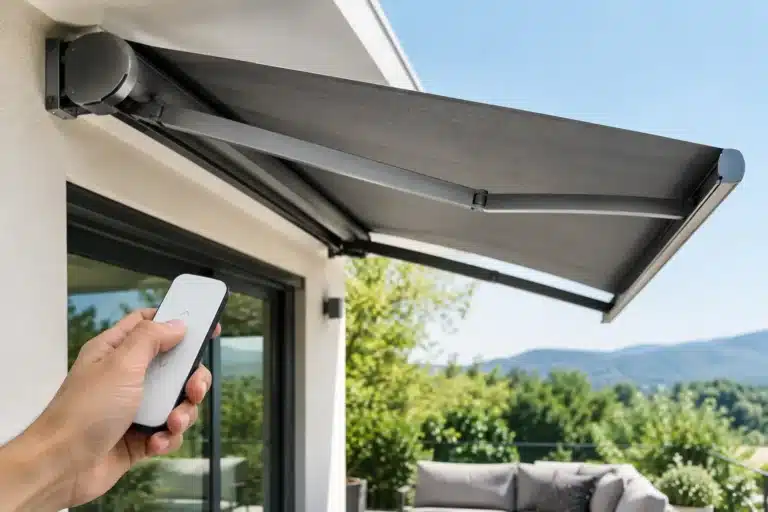
A retractable awning is especially useful in hot climates because it gives you flexibility. Extend it for midday shade, pull it back when you want open sky, and retract it during severe weather. Motorized operation makes this adjustment easy, which means homeowners and guests are more likely to use the awning as conditions change.
For commercial projects, planning should also account for seating layout, walkways, signage, and clearance requirements. A restaurant patio needs shade that serves the guest experience without making service paths awkward or blocking the visual character of the storefront. Designers benefit from selecting fabric early in the process so the color story, structure, and outdoor furnishings feel coordinated from the start.
Care That Helps Fabric Last in High Heat
Strong sun is unavoidable in warm regions, but neglect is not. Regular care protects both the appearance and life of the awning fabric. Brush off loose debris before it can settle into the weave, and rinse away pollen, dust, and salt residue with clean water as needed. For small spots, use a mild soap solution and a soft brush, following the fabric maker’s care guidance.
Avoid harsh cleaners, pressure washing, and aggressive scrubbing. These can damage the fabric finish or affect water repellency. Let the fabric dry fully before retracting it after rain or cleaning. Closing up a wet awning for long periods can encourage mildew, even on materials designed to resist it.
It is also wise to retract a patio awning in high winds or severe storms unless it is specifically engineered and approved for those conditions. Heat and sunlight are part of normal operation. Wind damage usually comes from leaving an awning extended when weather changes quickly.
A Smarter Way to Choose Your Fabric
The easiest choice is usually not a single “best” fabric for every location. It is a fabric selected around your climate, patio orientation, preferred color palette, and daily routine. A shaded breakfast deck has different needs than a west-facing pool area, and a hotel terrace requires a different level of coordination and durability than a private balcony.
As an authorized SunPro dealer serving Charlotte, NC, Simpli Shaded helps make those decisions more straightforward. Start with where the sun lands, how long you use the space, and the style you want the finished area to have. Then choose a breathable, exterior-rated fabric that gives the structure a polished look while making your outdoor destination far more comfortable when the heat is on.
Related on Simpli Shaded: Motorized retractable awnings in Charlotte · Motorized screens · What a motorized awning costs · 0% APR financing for qualified buyers · Areas we serve