Awning size is two numbers: width along the wall and projection out from it. Get either one wrong and the shade misses the seating or the awning overwhelms the back of the house. For a typical Charlotte patio the right size depends on the area you want shaded at the hottest hours, the mounting height, and the wind exposure. This guide shows how to work out the awning size you need before requesting a quote.
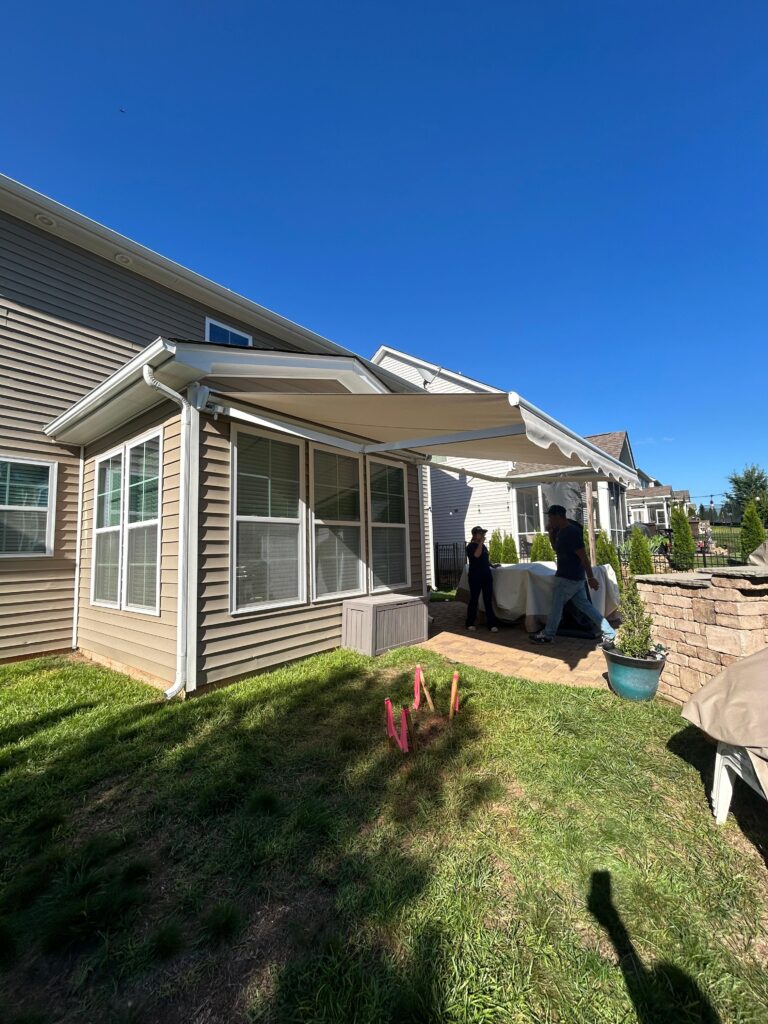
A well-sized retractable awning should shade the part of the patio where people sit, eat, cook, or relax without overwhelming the home’s exterior. Too small, and it leaves the table or seating area in direct sun. Too large, and it can feel out of proportion, create clearance issues, or extend farther than your patio layout requires.
Start With the Area You Want to Shade
Measure the usable outdoor area first, rather than measuring only the wall where the awning will be mounted. Think about the space as it is used on a typical afternoon. Include the dining table, lounge chairs, outdoor kitchen seating, or conversation set you want covered.
For a compact bistro setup, an awning that shades a 6-by-8-foot area may be enough. A standard dining set often needs coverage closer to 10 by 12 feet. Larger patios with a sectional, dining area, and grill may call for a wider awning, multiple awnings, or separate shade zones.
Leave a little room beyond the furniture footprint. If an awning stops exactly at the edge of the table, the shade line will shift as the sun moves. Adding 2 to 3 feet of coverage around the main seating or dining area gives you a more comfortable result during more hours of the day.
Awning Size Needed: Width and Projection Are Different
Awning dimensions are usually described by width and projection. Both matter, but they solve different problems.
Width is the horizontal measurement along the wall. It determines how much of your patio is shaded from side to side. Projection is how far the awning extends outward from the house when fully open. It determines how much depth of shade you receive.
For example, a 16-foot-wide awning with a 10-foot projection creates a generous shaded zone for a dining table or several lounge chairs. A 12-foot-wide awning with an 8-foot projection may be a better fit for a smaller deck or apartment patio.
As a practical starting point, choose a width that is at least as wide as the furniture grouping you want to cover. Many homeowners prefer the awning to extend 1 to 2 feet beyond each side of that grouping. This helps the space feel intentional and gives better protection when sunlight comes in from an angle.
Projection should generally cover the depth of your main activity area. If your table is 6 feet from the house but chairs extend another 3 feet beyond it, an 8-foot projection may feel tight. A 10-foot projection is likely the more useful choice.
Match the Projection to Your Sun Exposure
The sun’s path matters as much as the patio’s measurements. A patio facing west or southwest receives strong afternoon sun, often when families want to use the space most. In these locations, a deeper projection can make a noticeable difference in comfort.
A south-facing patio may receive broad sun exposure for much of the day. A wider and deeper awning can help, although the angle of the sun will still change with the seasons. East-facing patios usually benefit most from morning coverage, while north-facing patios may need less shade depending on surrounding trees and nearby structures.
A retractable awning provides flexible coverage, but fabric alone cannot block low-angle sunlight from every direction. If late-afternoon glare is a concern, consider a larger projection or an integrated drop valance, screen, or side shade solution. This is especially useful near pools, outdoor dining areas, and patios with western exposure.
Check Mounting Height and Clearance Before Choosing
A larger awning needs enough room to operate safely and comfortably. Before selecting a size, measure the available mounting area on the wall and confirm there are no conflicts with light fixtures, doors, gutters, vents, trim, or rooflines.
Mounting height affects the amount of headroom beneath the awning. A lower installation can limit projection options because the front bar must remain high enough for people to walk under it. As a general rule, the farther an awning projects, the more mounting height it may need to maintain a comfortable slope and proper water runoff.
Also look beyond the wall. Check for railings, steps, planters, trees, grills, and pool features that could interfere with the awning’s reach. An awning should extend over the space, not into an obstacle. For commercial patios, account for service paths, seating circulation, accessible routes, and local requirements before finalizing the layout.
Avoid Sizing Only for Today’s Furniture
Patios tend to evolve. A small café table may eventually become a full dining set. A bare deck may gain lounge chairs, a fire table, or a compact outdoor kitchen. If your wall space and patio depth allow it, choosing a slightly more generous awning can give you flexibility without requiring a future replacement.
That said, bigger is not always better. An awning that spans nearly the entire rear elevation may look right on a large home, but it can overpower a narrow patio or cover areas that do not need shade. The best proportion is one that complements the architecture while clearly serving the outdoor zone below it.
For a balanced appearance, consider the relationship between the awning width and nearby windows, doors, columns, and roof features. A centered installation often looks polished, but practical shade coverage should guide the decision. If the dining area sits off-center, it can make sense for the awning to do the same.
Common Awning Sizes and What They Cover
There is no single standard size for every patio, but a few ranges can help set expectations. Smaller awnings around 8 to 10 feet wide work well over a bistro table, a pair of chairs, or a narrow balcony. Mid-size options from 12 to 16 feet wide suit many residential patios and standard dining areas. Wider awnings from 18 to 20 feet or more are often chosen for large decks, expansive seating areas, and hospitality settings.
Projection commonly ranges from about 6 to 12 feet, with deeper options available for larger spaces. A 6- or 8-foot projection can provide useful shade near the house. A 10- or 12-foot projection is more appropriate when you want to cover a full dining setup or lounge arrangement farther from the wall.
If your patio is wider than the largest single awning that suits the structure, two coordinated awnings can create a more functional result. This approach also lets you open shade over one area while leaving another area open to the sky.
Consider How You Use the Space
The best awning size reflects your lifestyle. For outdoor meals, prioritize enough width and projection to cover pulled-out chairs, not just the tabletop. For lounging, cover the area where people recline, since partial shade can leave faces or legs in direct sun. Near a grill, keep the awning positioned to shade nearby seating rather than directly over a high-heat cooking zone unless the product specifications and local guidance allow it.
For restaurants, clubs, and hospitality patios, shade planning should account for table spacing and guest movement. Comfortable coverage can increase the number of hours a patio is usable, but staff need clear paths for service and a layout that still feels open and welcoming.
Motorized operation is especially helpful for larger awnings because it makes daily adjustments easy. Open the awning when the patio heats up, retract it when you want sunlight, and protect it when weather conditions call for it. Simpli Shaded helps homeowners and professionals match these practical choices with awning solutions designed for long-term outdoor use.
Measure Twice Before Ordering
Take three key measurements: the available wall width, the usable patio depth, and the furniture zone you want shaded. Then note the mounting height and photograph the wall, including windows, doors, lights, and other obstructions. These details make it much easier to select an awning that fits both the structure and the way you live outside.
A patio should not require everyone to chase the narrow strip of shade beside the house. Choose an awning size that gives your favorite outdoor moments a comfortable place to happen, from a quiet morning coffee to a full table of guests on a sunny afternoon.
Related on Simpli Shaded: Motorized retractable awnings in Charlotte · Motorized screens · What a motorized awning costs · 0% APR financing for qualified buyers · Areas we serve