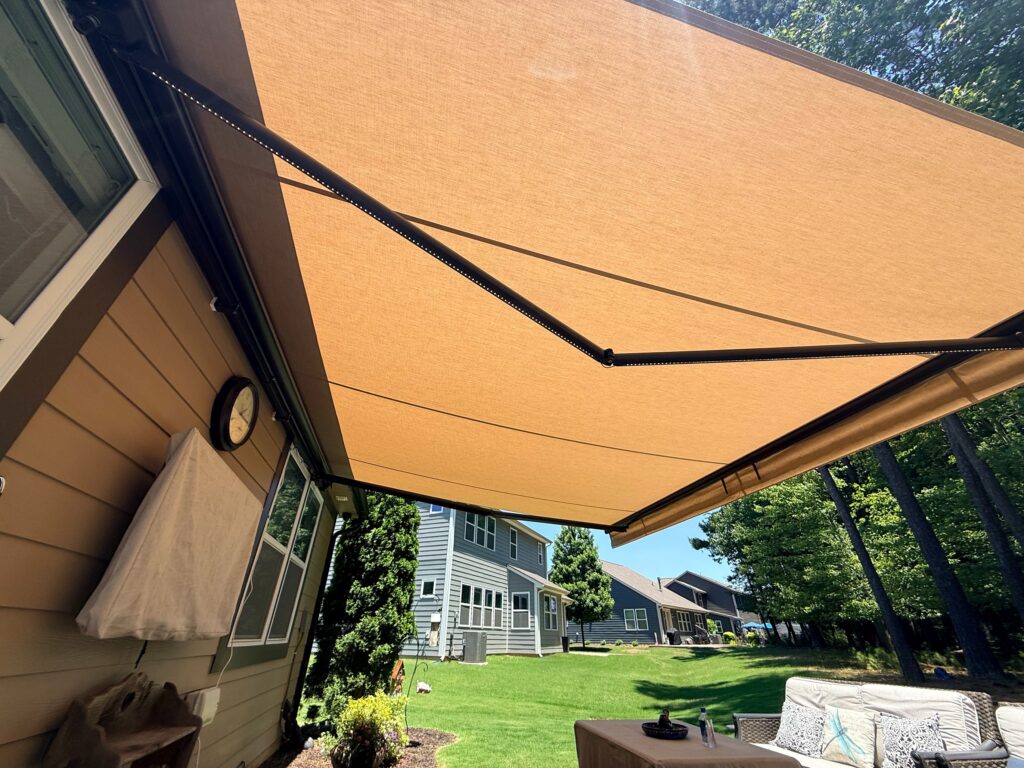
Most patios in the Charlotte area get used far less than they should, and the reason is almost always the sun. Seating that faces west is unbearable from three o’clock on, cushions fade, and dinner moves inside. A motorized awning fixes that at the push of a button: full shade when you want it, open sky when you don’t. Here is how motorized awnings make a patio more usable, what the options are, and what to expect from an installation.
Why motorized awnings are worth considering
A retractable awning provides control that a fixed roof structure cannot always offer. Extend it for a sunny lunch, then retract it later to enjoy the evening sky or protect the awning when weather changes. Adding motorized operation makes that control simple enough to use every day, rather than treating shade as something that requires effort or planning.
For homeowners, the main benefit is comfort. A properly sized awning reduces direct sunlight over the area where people actually sit, eat, and gather. It can also help limit the sun exposure that makes patio furniture, rugs, and interior rooms near large windows feel hotter. The shade does not replace sunscreen or other sun-safe habits, but it creates a more inviting place to spend time outdoors.
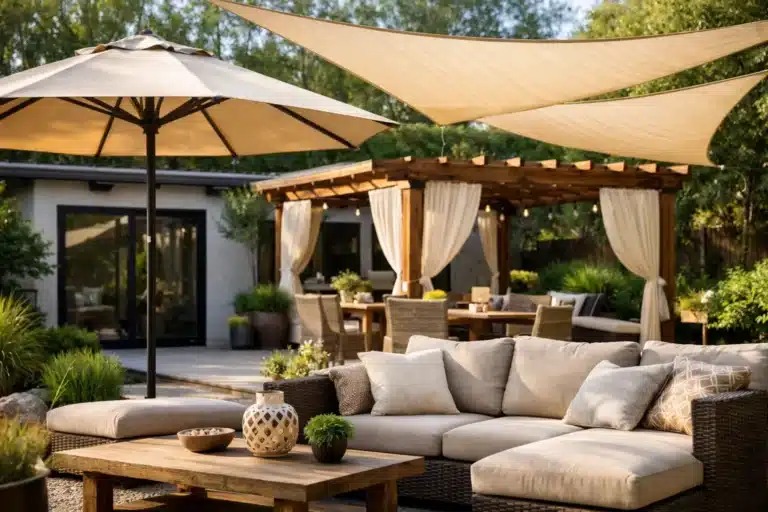
There is also a design benefit. When retracted, the awning preserves the open look of your home’s exterior. When extended, the fabric adds color, texture, and definition to an outdoor room. That flexibility is especially useful for homes where a permanent pergola or roof would feel too heavy, block too much natural light, or require a larger construction project.
The right choice depends on how you use the space. A family that spends weekends by the pool may value a wide coverage area and easy remote operation. Someone with a compact urban deck may prioritize a clean cassette and fabric color that works with the building. For a restaurant patio, dependable daily use, coordinated design, and consistent guest comfort often lead the decision.
How motorized awnings work
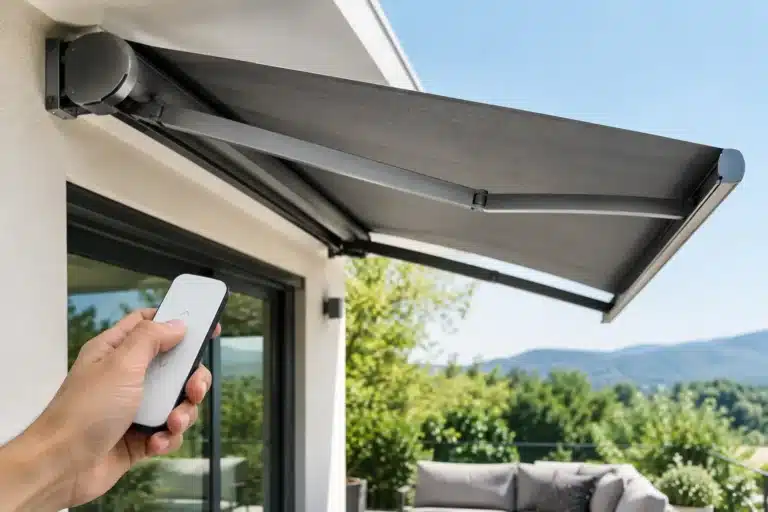
Motorized awnings use an electric motor inside the roller tube to extend and retract the fabric. Depending on the model and setup, operation may be controlled by a handheld remote, a wall switch, or a compatible smart-home control. The appeal is not complicated technology. It is the ability to adjust your shade without interrupting the moment.
Many systems can also be paired with weather sensors. A sun sensor can extend the awning when direct sunlight reaches the area, while a wind sensor can retract it when conditions become too strong. These additions are helpful for busy households and commercial settings, but they are not a substitute for paying attention to the forecast. Retractable awnings should generally be brought in during high winds, heavy rain, snow, or severe weather unless the manufacturer specifically states otherwise.
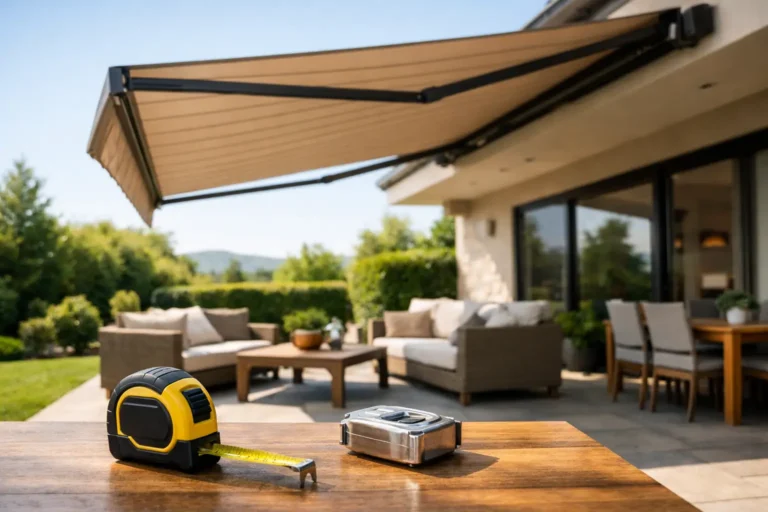
The awning frame carries the fabric outward from the wall, creating a shaded zone below. The amount of coverage is determined by two measurements: width, which runs along the wall, and projection, which is how far the awning extends outward. Both matter. A very wide awning with a shallow projection may leave the dining table exposed, while a deep projection on a narrow patio may offer more shade than the layout needs.
Choosing motorized awnings that fit your space
Start with the area you want to make more usable, not simply the wall where the awning will be mounted. Picture where chairs, a dining table, a grill, or lounge furniture will sit. Then consider the sun’s path. Afternoon sun from the west may call for a different placement or projection than a morning-facing breakfast patio.
Measure for real-life coverage
Measure the available mounting width and note windows, exterior lights, downspouts, doors, and rooflines that could affect placement. Then measure the depth of the seating or dining area. A shade specialist or qualified installer can help translate those dimensions into an awning size that looks balanced and performs well.
Mounting surface matters just as much as size. Brick, concrete, wood framing, and certain siding systems each require the right hardware and anchoring approach. A secure installation protects the awning, the exterior wall, and everyone enjoying the space below it. This is one area where guessing is not worth the risk.
Select fabric for sun, style, and maintenance
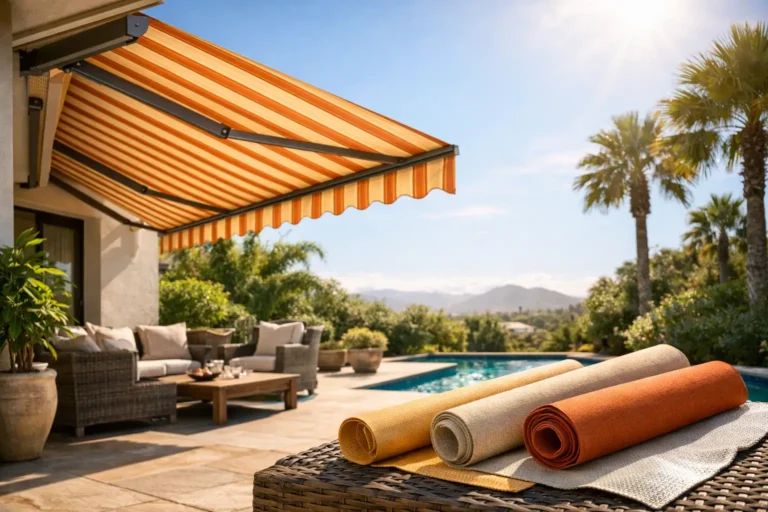
Awning fabric has a practical job, but it also has a visible role in the overall look of the property. Solid neutrals can create a tailored, architectural appearance. Stripes bring a classic resort feel and can connect the awning to cushions, outdoor furniture, or trim colors. Darker fabrics often create stronger visual contrast, while lighter choices can keep the exterior feeling airy.
Look for exterior-grade fabric designed to resist fading and handle regular sun exposure. The best color is not always the lightest one. A fabric should complement the home while giving the patio the level of shade you want. Viewing fabric samples outdoors can be useful because sunlight changes the way color appears compared with indoor lighting.
Decide which features will make a difference
Remote control is the natural starting point for most motorized awnings. From there, consider whether a wind sensor, sun sensor, LED lighting, or smart controls will genuinely improve how the space is used. Lighting can make an awning-covered patio more enjoyable after sunset, while weather automation can offer added peace of mind for people who are away from home during the day.
A protective cassette is another worthwhile consideration. On cassette-style models, the fabric and arms are enclosed when the awning is retracted. This creates a clean finished appearance and helps shield the components from dirt and weather. It can be a strong choice for homeowners who value a polished exterior or for commercial locations where the awning is part of the public-facing design.
Installation is where performance begins
An awning should be selected with installation in mind, not treated as an afterthought. Proper mounting height affects head clearance, slope, rain runoff, and the awning’s final position over the patio. Electrical access also needs to be planned so the motor is powered safely and the finished result looks intentional.
Professional installation is often the most straightforward route, particularly for larger units, masonry walls, upper-story mounting, or commercial projects. An experienced installer can verify structural support, position the brackets correctly, set the pitch, and test operation before the awning becomes part of your daily routine. Simpli Shaded’s long-standing shade expertise is built around making these decisions clearer, from product selection through installation support.
For business owners, a professional approach helps protect the guest experience. An awning over café tables or a hotel terrace needs to look aligned, operate reliably, and suit the building’s architecture. It may also need to coordinate with local requirements, signage, or an existing exterior design plan.
Use weather awareness to protect your investment
Motorized operation makes it easy to retract an awning quickly, but owners still need to use good judgment. Retractable awnings are designed for sun protection and light outdoor enjoyment, not as all-weather structures. Strong winds can place significant stress on the frame and mounting points. Standing water from heavy rain can also damage fabric or components if the awning is not set up for those conditions.
Make retraction part of your routine when a storm is expected or when leaving the property for an extended period. If your area regularly experiences sudden wind gusts, a wind sensor can be especially useful. In coastal, mountain, or storm-prone locations, ask about options suited to the local environment and follow the manufacturer’s care guidance closely.
Keep the awning looking its best
Routine care is simple and helps preserve both appearance and performance. Brush away loose leaves, pollen, and debris before it builds up in the fabric or frame. For general cleaning, use the cleaning method recommended for your specific fabric, typically with mild soap, water, and a soft brush. Allow the fabric to dry fully before retracting it for an extended period whenever possible.
A quick seasonal check is also smart. Look over the fabric for marks or wear, make sure the frame is clear of debris, and test the motor before the busiest outdoor months begin. If operation sounds unusual, the awning does not extend evenly, or you notice loose hardware, contact a qualified service professional rather than forcing the system.
A well-chosen awning does more than add shade to an exterior wall. It gives people a reason to stay outside longer, whether that means an unhurried family dinner, a cooler poolside afternoon, or a more welcoming table for a restaurant guest. Choose the size, fabric, and controls around the way your space is actually lived in, and the shade will feel like it was always part of the plan.
Related on Simpli Shaded: Motorized retractable awnings in Charlotte · Motorized screens · What a motorized awning costs · 0% APR financing for qualified buyers · Areas we serve