
A patio can feel perfect at 10 a.m. and too hot to use by lunchtime. That is why the choice between manual versus electric awnings is less about picking a feature and more about deciding how you want your outdoor space to work. Both provide welcome shade, help reduce UV exposure, and make decks, patios, pool areas, and storefront seating more comfortable. The better option depends on the awning’s size, location, and how often you expect to use it.
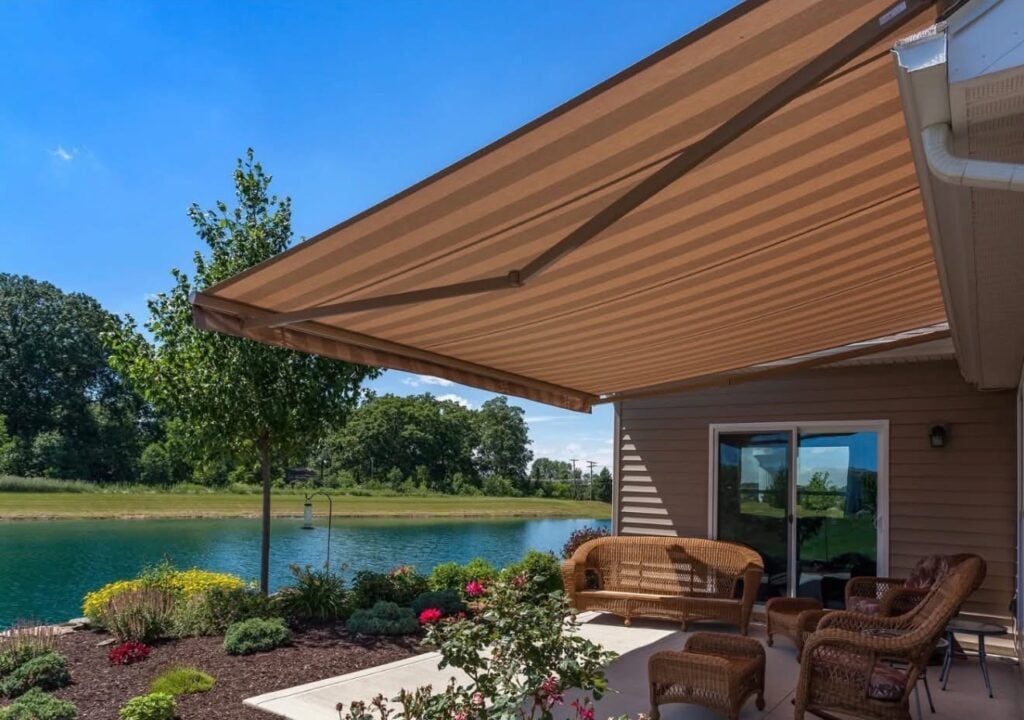
Manual versus electric awnings at a glance
A manual retractable awning is opened and closed with a hand crank. An electric awning uses a motor and is typically operated by a wall switch, remote control, or compatible smart-home control. The fabric, frame quality, projection, and mounting requirements can be comparable between the two. The real difference is how much physical effort and day-to-day convenience you want from the system.
Manual awnings are often the practical choice for smaller patios, seasonal spaces, and homeowners who plan to extend the awning only occasionally. Electric models tend to suit larger outdoor living areas, frequently used patios, upper-level decks, and commercial spaces where fast, consistent operation matters.
Neither is automatically better. A well-made manual awning can offer years of dependable shade, while a motorized model can make a patio feel like an extension of the home rather than another area that needs setup before it can be enjoyed.
Why a manual awning still makes sense
Manual awnings appeal to homeowners who value straightforward operation. Turn the crank, extend the shade, and enjoy the space. There is no motor, remote, electrical connection, or control setting to consider. That simplicity can be especially appealing for a small patio where the awning is easy to reach and only used during the hottest part of the day.
The lower upfront cost is another advantage. Because manual systems do not require a motor or electrical work, they are generally less expensive to purchase and install. For a budget-conscious project, that difference may leave more room to choose a larger projection, upgraded fabric, or a frame color that better coordinates with the home.
Manual operation also gives you a direct sense of control. You can stop the awning at the position that best shades a dining table or seating area as the sun moves. Electric awnings offer adjustable positions too, but some homeowners simply prefer the familiar feel of a crank-operated system.
Where manual operation is most practical
A manual awning is often a strong fit when the installation is on a ground-level patio or a compact deck, the awning will be extended a few times a week rather than several times a day, and the user can comfortably operate a crank. It can also be a sensible option for a vacation property or secondary outdoor area where simplicity is the priority.
There are limitations to consider. Larger awnings require more turns of the crank and more physical effort. If the patio gets daily use, that small task can become the reason the awning stays retracted when it could be providing useful shade. A crank can also be less convenient when furniture, planters, or railings make access awkward.
What electric awnings add to outdoor living
Electric awnings are built for ease. With the push of a button, shade is available when the afternoon sun reaches the patio, when guests arrive, or when a bright dining area needs quick relief. That convenience sounds simple, but it can significantly change how often an outdoor area gets used.
For homeowners with larger awnings, motorization removes the effort of operating a wide, heavy unit by hand. It is also helpful for people who may find cranking difficult due to mobility, strength, or reach. A remote-controlled awning can be opened from a lounge chair, kitchen door, or poolside seating area, which makes shade feel readily available rather than something that requires preparation.
Many electric models can be paired with weather sensors. A sun sensor can extend the awning when sunlight becomes intense, while a wind sensor can retract it when conditions become unsafe. These additions are not required, and they do add cost, but they can be valuable for exposed patios or hospitality spaces where staff cannot monitor every awning throughout the day.
When the upgrade is worth it
Electric operation is usually worth considering when an awning covers a frequently used dining area, outdoor kitchen, pool deck, or large entertaining space. It is also a practical choice for second-story installations, where a manual crank may be inconvenient, and for commercial patios that need a polished, dependable guest experience.
Restaurants, clubs, and hospitality venues often favor motorized systems because staff can adjust several shaded areas quickly. Homeowners may reach the same decision for a simpler reason: when shade is easy to use, everyone uses it more often.
Cost is more than the price of the awning
The most visible difference in a manual versus electric awnings comparison is the initial price. Manual awnings generally cost less because they have fewer components and do not need power. Electric awnings include a motor, controls, and sometimes electrical installation by a qualified professional.
That said, the lowest purchase price is not always the best long-term value. Consider how the awning will be used over several seasons. If a motorized model means the patio is comfortable enough for more family meals, weekend gatherings, or work-from-home breaks, the added convenience can justify the investment.
Installation conditions matter as well. If a nearby exterior outlet or existing electrical access is available, adding a motor may be relatively straightforward. If power must be run across a finished wall, around masonry, or to a difficult location, installation costs can rise. A dealer or experienced shade professional can assess the mounting surface, clearance, and power options before a decision is made.
Maintenance and durability considerations
A high-quality awning is designed for outdoor use, but every retractable model benefits from sensible care. Keep the fabric clean, remove leaves and debris from the frame, and retract the awning during strong winds, heavy rain, or snow unless the product is specifically rated for those conditions. An awning provides shade, not a permanent roof.
Manual awnings have fewer mechanical parts, which can mean fewer components to service. Electric awnings add a motor and controls, but quality motors are designed for repeated use and are typically low-maintenance. The key is proper installation and choosing a system sized appropriately for the space.
For either style, frame construction and fabric quality deserve as much attention as the operating method. A durable frame helps the awning remain stable, while performance fabric supports color retention and UV protection. A beautiful stripe or neutral solid should also be able to stand up to the sun that made the awning necessary in the first place.
Match the awning to the way you use the space
Start with the daily reality of the patio. If you typically step outside, crank out the awning, and settle in for an afternoon, a manual model may deliver everything you need. If you want shade available quickly before breakfast, while carrying food outside, or when the sun shifts during a gathering, electric operation will likely feel more natural.
Also think about the people using the space. A manual awning may work well for an able-bodied homeowner who enjoys a hands-on setup. An electric model is more accommodating for multigenerational households, busy families, and properties where several people need to operate the shade without instruction.
Design should remain part of the decision. The right awning can frame a patio, soften a hardscape, and bring the home’s exterior colors into the outdoor living area. At Simpli Shaded, the goal is to pair that visual finish with practical shade that makes the space genuinely more inviting.
A better question than which one is best
Rather than asking whether a manual or electric awning is best, ask what would make you use your patio more often. For some homes, that answer is a simple crank and reliable shade at a manageable cost. For others, it is the ability to create a cool, comfortable destination with one button. Choose the option that fits your routine, then let the outdoor space do what it should: give you a reason to stay outside a little longer.
Related on Simpli Shaded: Motorized retractable awnings in Charlotte · Motorized screens · What a motorized awning costs · 0% APR financing for qualified buyers · Areas we serve


