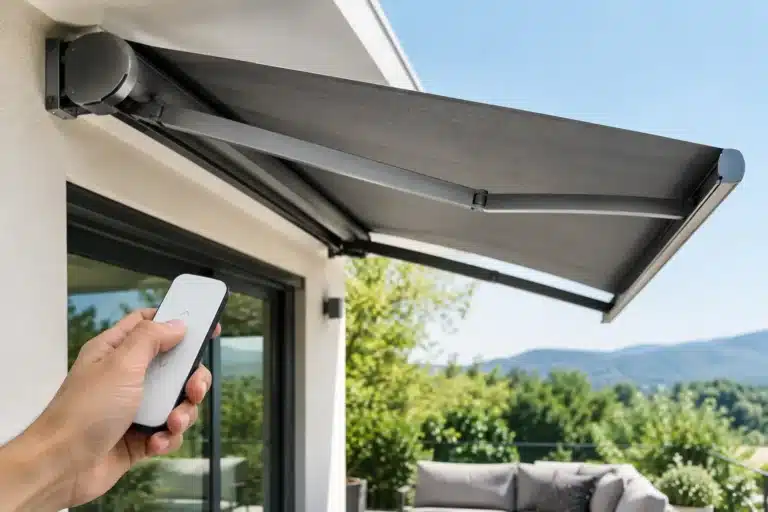
Not every deck needs a pergola to get shade. In the Charlotte area, a retractable awning mounted to the house often does the job with less cost, no posts eating into the deck space, and the option to open the sky back up in the evening. Below are practical deck shade ideas that skip the pergola, along with what each one costs to live with, how it handles Carolina weather, and where it fits best.
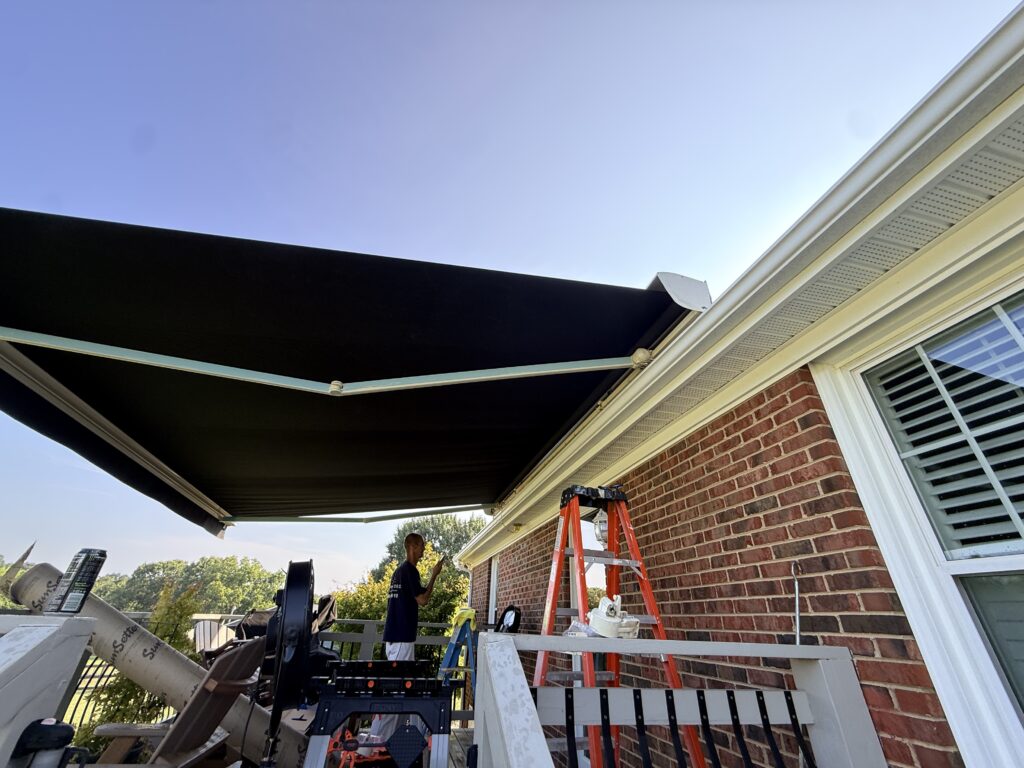
The best fit depends on how much sun you receive, whether you need rain protection, and how permanent you want the installation to be. Start by deciding where shade matters most: over a dining table, a conversation area, a grill-adjacent lounge space, or the full deck footprint.
Start With the Shade Coverage You Actually Need
Before selecting a product, watch the deck at different times of day. Morning sun may call for coverage on one side of the deck, while harsh late-afternoon light may require a solution that extends farther or can be angled. A small movable shade source can be perfect for a pair of lounge chairs, but it will feel undersized over a long dining table with six seats.
Also consider the deck’s location. A sheltered deck attached to the house can support wall-mounted options well. An open, freestanding deck may be better suited to a cantilever umbrella, shade sail, or portable structure. Wind exposure matters just as much as sunlight. In breezy areas, products need solid anchoring and should be retracted, removed, or secured when conditions turn rough.
Deck Shade Ideas Without a Pergola That Look Finished
1. Retractable awnings for house-adjacent decks
For many homeowners, a retractable awning is the most polished way to shade a deck without building a pergola. It mounts to the exterior wall and extends outward when the sun is strongest, creating a comfortable covered zone without taking up deck floor space. When you want open sky, it retracts neatly back toward the house.
A motorized awning is especially useful for decks used throughout the day. With simple operation, you can adjust your outdoor setting before lunch, a family gathering, or an afternoon of reading outside. It also helps protect outdoor furniture and decking from prolonged UV exposure. For a deck directly off the kitchen or living room, the convenience can make the outdoor area feel like a natural extension of the home.
The trade-off is that awnings require a suitable mounting surface and professional planning. They are designed primarily for sun protection, not for holding heavy rain or standing up to severe wind while extended. Choose a fabric color and frame finish that coordinate with your home’s siding, trim, and outdoor furnishings for a purposeful result.
2. Cantilever umbrellas for flexible coverage
A cantilever umbrella places its support pole off to the side, leaving the area beneath the canopy open for seating or dining. That makes it a smart choice when a standard center-pole umbrella would interrupt the layout of a table or sectional. Many designs rotate or tilt, allowing you to follow changing sun angles without relocating all your furniture.
This option works particularly well on decks where permanent wall mounting is not possible. It can also be moved as your layout changes from season to season. Use a base sized specifically for the umbrella model, and avoid treating a lightweight base as a shortcut. A large canopy catches wind quickly, so stability is part of the purchase, not an accessory to add later.
3. Market umbrellas for small dining zones
A classic market umbrella remains one of the simplest deck shade solutions. It fits through the center of a dining table and provides immediate comfort for breakfast, lunch, or casual evening meals. It is less expensive and easier to reposition than most permanent systems, making it a sensible starting point for first-time deck upgrades.
The limitation is coverage. A single market umbrella shades a defined area, not an entire deck. It is best for compact furniture groupings and spaces where the sun is fairly predictable. Select a canopy with UV-resistant outdoor fabric, a sturdy frame, and a vented top that can help reduce wind pressure.
4. Shade sails for modern, architectural lines
Shade sails use tensioned fabric stretched between mounting points to create clean, angled planes of shade. They can feel contemporary and sculptural, especially when layered at varying heights or paired with a deck that has crisp railings and simple furniture. Triangular sails can cover awkward corners, while rectangular versions provide broader coverage.
Their success depends on careful installation. Sails need strong anchor points, proper tension, and a slight angle so water does not collect overhead. They are not a casual tie-off project using weak deck rails or small hooks. A well-installed shade sail can be striking; an undersupported one can sag, flap, and create unnecessary stress on the structure.
5. Outdoor curtains for low-angle sun and privacy
Outdoor curtains do not replace overhead shade, but they solve a different problem well: intense side sun. If your deck gets strong late-day light from one direction, weather-ready curtains mounted to an existing porch roof, balcony, or freestanding frame can soften glare and add privacy from nearby homes.
Choose fabrics intended for outdoor use and hardware that will not corrode. Curtains look best when they have enough room to hang naturally rather than being stretched tightly. They should also be secured during windy weather. Pair them with an awning or umbrella for a more complete, layered shade plan.
6. A pop-up canopy for occasional entertaining
For graduation parties, backyard celebrations, and seasonal gatherings, a pop-up canopy offers fast coverage without a permanent commitment. It is a practical option for renters, homeowners still planning a larger outdoor project, or anyone who needs extra shade only a few times a year.
Look for a commercial-grade frame if you expect regular use, rather than the lightest model available. Secure it properly with appropriate weights or anchors, and never leave it unattended in changing weather. A pop-up canopy is useful and economical, but it rarely delivers the tailored appearance or long-term convenience of a retractable shade system.
7. A freestanding canopy for larger open decks
A freestanding canopy or pavilion-style shade structure can cover a wider deck area without attaching to the house. This is useful for detached decks, poolside platforms, and spaces where wall-mounted awnings are not an option. Some designs offer adjustable fabric roofs, giving you greater control over sun exposure.
Because these structures have posts, footprint planning is essential. Place them where they frame the seating area without blocking stairs, pathways, or views. Check local requirements and deck load considerations before installation, especially when the structure will be anchored permanently.
8. Roll-down exterior shades for covered decks
If your deck already has an overhead roof, balcony, or deep eave, roll-down exterior shades can make the space dramatically more comfortable. They reduce glare, filter sunlight, and provide a sense of enclosure while preserving airflow and outward views. They are particularly effective on west-facing decks where the sun sits low in the afternoon.
This is a targeted solution rather than full overhead coverage. It works best alongside an existing roofline, awning, or other top shade source. The benefit is a more usable outdoor room without making it feel closed off.
9. Natural shade with containers and trellises
Large planters, tall ornamental grasses, and climbing plants on a freestanding trellis can soften direct side sun while adding color and texture. This approach is best viewed as a supplement to a primary shade product. Plants take time to grow, and their coverage changes through the seasons, but they can make a deck feel cooler and more private.
Use substantial containers that suit the scale of the deck and plan for irrigation. A few undersized pots will not provide meaningful shade or the finished look most homeowners want. For design continuity, echo the color of your planters in cushions, rugs, or umbrella fabric.
Match the Solution to How You Use the Deck
A breakfast deck may only need a market umbrella. A deck used for daily meals and weekend entertaining often benefits from the broad, reliable coverage of a retractable awning. If your deck is detached from the home, a cantilever umbrella, shade sail, or freestanding canopy may make more sense.
For designers and hospitality buyers, consistency matters across multiple spaces. Standardizing canopy colors, frame finishes, and operating styles can create a cohesive outdoor experience while making future replacement and maintenance easier. Durable materials and dependable shade coverage are especially valuable where guests use the space every day.
At Simpli Shaded, the goal is not simply to add fabric overhead. It is to create an outdoor destination that feels comfortable when the sun is high and polished when guests arrive.
Choose the shade solution that fits your deck’s real habits, not just its square footage. The most successful upgrade is the one that makes you linger outside for another meal, another conversation, or one more quiet hour at the end of the day.
Related on Simpli Shaded: Motorized retractable awnings in Charlotte · Motorized screens · What a motorized awning costs · 0% APR financing for qualified buyers · Areas we serve