A patio can go from calm to blustery before the drinks are poured. That is why knowing when should awnings retract is less about following a rigid schedule and more about responding to the conditions around your home or business. A retractable awning is designed to make sunny spaces more comfortable. Retracting it at the right time helps protect the fabric, frame, and motor so that comfort is ready when you are.
When should awnings retract? Start with wind
Wind is the clearest signal to bring a retractable awning in. An extended awning creates a broad surface that catches gusts, putting pressure on its arms, brackets, and mounting points. Even an awning that feels solid in a light breeze can be affected by a sudden gust rolling across an open deck, corner lot, pool area, or upper-story balcony.
As a practical rule, retract the awning when winds begin building or when the forecast calls for gusty conditions. Many homeowners use about 20 mph as a cautious decision point, but the appropriate wind limit depends on the awning model, its projection, how it is mounted, and how exposed the location is. A protected patio between two walls behaves very differently from a waterfront terrace or a restaurant seating area with no windbreaks.
Do not wait for the fabric to flap, snap, or pull noticeably at the front bar. By then, the awning is already under more strain than it should be. If you see trees moving consistently, umbrellas being difficult to manage, or loose patio items shifting, retract the awning and secure the space.
Gusts matter more than the average forecast
Weather apps may show a moderate average wind speed while also predicting much stronger gusts. Those gusts are what can catch an extended awning by surprise. Check both numbers before leaving home, especially during spring and summer storm patterns.
For commercial patios, a clear staff routine is helpful. Whoever opens the outdoor area should know how to operate the awning, where the controls are located, and when to retract it. That simple process protects the shade investment and helps keep guest areas polished and ready for service.
Retract before storms, not during them
Thunderstorms bring more than wind. Heavy rain, lightning, abrupt temperature changes, and debris can all arrive quickly. If a storm is forecast, retract the awning before it reaches your property rather than trying to operate it after conditions turn rough.
Motorized awnings make this easier because you can close the shade with a wall switch, remote, or smart control while you are still enjoying the patio. Some systems can also use wind sensors that automatically retract the awning when conditions exceed a selected setting. These sensors add useful protection, particularly for vacation homes, second-floor decks, and commercial spaces, but they should not replace basic weather awareness. Sensors need proper placement, battery checks where applicable, and seasonal testing.
If lightning is nearby, avoid handling electrical controls outdoors. Once it is safe, inspect the area for leaves, branches, or other debris that may have landed on the awning cassette or arms.
Rain depends on your awning and the rainfall
A light, brief shower is not always an emergency for an awning, but rain deserves more attention than many owners expect. Standard retractable awning fabric is primarily made for shade and UV protection, not for carrying standing water. If rainwater pools in the fabric, its weight can stretch the material and stress the frame.
Whether you can leave an awning extended in rain depends on its pitch, fabric tension, drainage, and the manufacturer’s guidance. A properly installed awning should slope enough for water to run off its front edge. Even so, heavy downpours, wind-driven rain, or clogged runoff paths can overwhelm that slope.
Retract the awning before heavy rain whenever possible. If it gets wet in a passing shower and the weather clears, extend it again once conditions are calm so the fabric can air-dry. Rolling wet fabric away for an extended period can encourage mildew, staining, and trapped moisture. If you must retract it while wet because wind or a storm is moving in, reopen it to dry at the first safe opportunity.
Snow, ice, and freezing weather call for a closed awning
Retractable awnings are not snow roofs. Snow accumulation is heavy, and freezing moisture can stiffen fabric, interfere with moving parts, and make operation difficult. Before the first meaningful snowfall, make sure the awning is fully retracted.
The same advice applies during ice storms and prolonged freezing rain. Never try to force an awning open or closed if you suspect ice is binding the fabric, front bar, or arms. Wait for temperatures to rise and let the ice melt naturally. Forcing the motor or manually pulling on frozen components can cause avoidable damage.
In regions with a true winter season, keeping the awning retracted during long stretches of cold weather is the sensible default. A cassette-style awning offers added protection by enclosing the fabric and working components when closed, helping maintain a cleaner, more finished appearance between seasons.
Retract it when you are away or asleep
A calm, sunny afternoon is exactly what an awning is for. But if no one will be home to respond to a changing forecast, retracting it is often the wiser choice. Weather can shift quickly, and an extended awning cannot protect itself from a sudden squall.
This is particularly relevant for homeowners who travel, rental-property owners, and businesses that close overnight. If the forecast is stable and your awning has a properly configured wind sensor, you may feel comfortable leaving it out for short periods. Still, for most standard retractable awnings, closing it when the property is unattended reduces unnecessary exposure.
An awning should also generally be retracted overnight. Beyond weather risk, this keeps the patio looking tidy, limits exposure to dew and debris, and gives you a clean start the next morning. The exception is a location with predictable, calm conditions and a specific operational reason to keep shade deployed, such as a hospitality venue preparing for an early event. Even then, the forecast should guide the decision.
When it is best to leave an awning extended
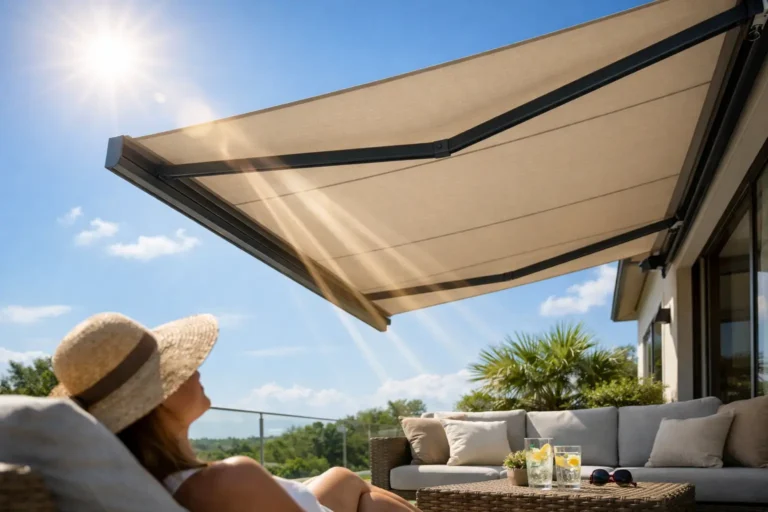
Retraction is not the goal every day. Your awning is there to make the outdoors more usable during the hours you want to enjoy it. Leave it extended during dry, calm weather to create a cooler seating area, reduce glare near patio doors, and help protect outdoor furnishings from intense sun.
The best time to extend it is often before the patio becomes hot. By shading the surface early, you can help keep pavers, decking, and nearby indoor rooms from absorbing as much heat. For west-facing patios, that may mean opening the awning in the early afternoon before late-day sun becomes harsh. For a poolside area or a café terrace, it may mean adjusting the shade schedule around the busiest guest hours.
Use the awning with its intended pitch and extension. Do not tie it down, hang heavy lights from it, or use the front bar as an anchor point for decorations. These additions can alter how the awning handles wind and create uneven stress on the system.
Build a simple weather routine
The easiest way to protect an awning is to make weather checks part of your outdoor routine. Before extending it, take a quick look at the sky and forecast. Before leaving the house, closing the business, or going to bed, check whether wind, rain, or storms are expected.
A few seasonal habits also help. Clear leaves and twigs from around the cassette and frame, brush off dry surface debris, and inspect the fabric for sagging or signs of wear. If the awning moves unevenly, makes unusual sounds, or does not retract fully, stop using it until the issue is assessed. A small adjustment is far easier to address than damage caused by continuing to operate a stressed system.
As an authorized SunPro dealer serving Charlotte, NC, Simpli Shaded sees the same principle hold true across patios, decks, restaurants, and resort spaces: the best-looking awning is one that is used confidently and protected thoughtfully. Let it create the cool, inviting outdoor destination you bought it for, then bring it home before the weather asks it to do more than shade.
Related on Simpli Shaded: Motorized retractable awnings in Charlotte · Motorized screens · What a motorized awning costs · 0% APR financing for qualified buyers · Areas we serve