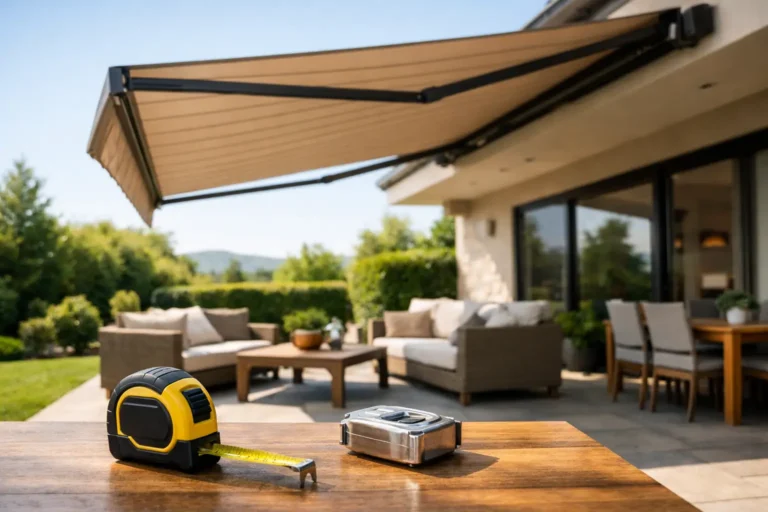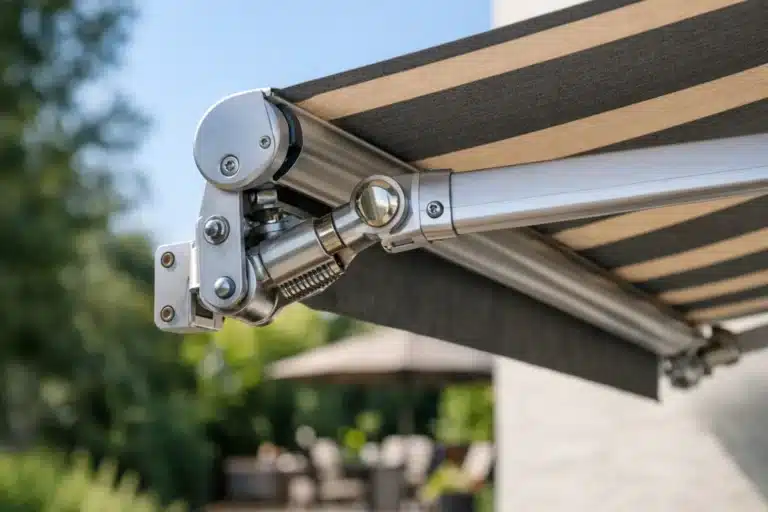
UV is the reason a Charlotte patio feels hotter than the thermometer says and the reason cushions, decking and furniture fade by August. A retractable awning with the right fabric blocks most of that UV before it reaches the seating area, and retracts when you want the sun back. This article explains how much UV protection an awning provides, which fabrics do it best, and how shade changes the temperature under the awning.

For homeowners, that means more comfortable afternoons and a better chance of using the outdoor space you invested in. For restaurants, hotels, and other hospitality settings, it can mean more inviting seating and a more polished guest experience. The right awning does more than cast a shadow. It helps manage exposure to ultraviolet rays while making an exterior area feel intentionally designed.
What UV Protection From a Retractable Awning Does
A quality retractable awning canopy filters much of the direct sunlight that reaches the space beneath it. That matters because ultraviolet rays contribute to skin damage and can fade furniture, rugs, cushions, flooring, and décor over time. When an awning shades a patio or deck during the strongest part of the day, it reduces the intensity of that direct exposure.
Many exterior fabrics are rated by UPF, or Ultraviolet Protection Factor. A fabric with a UPF 50+ rating blocks at least 98% of UV radiation passing directly through the material. That is a strong level of protection for the area directly under a properly positioned awning, but it is not the same as creating a fully enclosed room. Sun can still reach a space from the sides, reflect off water or light-colored surfaces, and shift as the day goes on.
That distinction is useful when planning shade. An awning is an excellent tool for improving comfort and reducing direct UV exposure, while sunscreen, hats, and other personal protection still matter when people are outdoors for extended periods.
Retractable Awning UV Protection Depends on the Fabric
The frame gives an awning its reach and structure, but the fabric does much of the work when it comes to sun control. Exterior-grade acrylic and high-quality performance fabrics are popular choices because they are made to handle sunlight, moisture, and regular outdoor use without quickly losing their color or shape.
Color affects the feeling of the space, but it should not be the only factor in the decision. A darker canopy may reduce glare more effectively and create a cozier sense of shade. Lighter colors can keep the covered area feeling bright and open, which is especially appealing on smaller patios or near windows. Both can offer excellent UV protection when the fabric itself is rated for outdoor performance.
Pattern also has a practical role. Stripes and textured neutrals can coordinate with exterior finishes while helping everyday dust or pollen feel less noticeable between cleanings. The best choice is one that supports the home or venue’s style without asking the fabric to do more than it can. For example, a very light fabric may make a patio look airy, but it may not provide the same glare reduction as a deeper tone on a west-facing deck.
Coverage Matters as Much as Fabric Quality
A premium fabric cannot protect an area it does not cover. Before selecting an awning, look at where the sun lands from late morning through the evening. A patio that gets intense western exposure often needs more projection than one that receives mostly overhead midday sun. The goal is to shade the seating area when it is most likely to be used, not simply to cover the space nearest the wall.
Projection is the distance the awning extends outward from the building. It is one of the biggest factors in real-world comfort. A shallow awning may shade a doorway or window but leave the dining table exposed. A deeper projection can make an outdoor living zone substantially more usable, provided the mounting location and available clearance support it.
Height also changes the result. An awning mounted higher on the wall gives more headroom, but sun can travel farther underneath it at lower angles. A lower mounting position may improve afternoon shade, though it must still allow comfortable access and work with doors, windows, gutters, and architectural details. This is where experienced product guidance makes the buying process much easier.
For commercial patios, coverage planning should account for table layouts, guest pathways, service areas, and local requirements. The most attractive canopy is only part of the solution. The installation should make the seating area easier to operate day after day.
Why Retractable Shade Is a Smart Choice
Fixed structures provide permanent coverage, but they also permanently change the amount of daylight entering adjacent rooms. A retractable awning gives homeowners and business owners more control. Extend it when the sun is strong, then retract it when you want open sky, natural light, or a clear view of the stars.
That flexibility can also support the awning’s long-term condition. Retracting the canopy during severe weather, extended periods of nonuse, or when high winds are expected helps protect the fabric and frame. A motorized awning makes this routine simple, especially for larger units that would be inconvenient to operate manually.
For many households, a wind sensor is a worthwhile addition. It can automatically retract the awning when winds increase, offering an extra layer of reassurance when weather changes quickly. It is a convenience feature, not a reason to ignore forecasts or leave an awning extended in questionable conditions, but it can be very helpful for busy homeowners and commercial operators.
Better Shade Also Protects the Outdoor Space You Furnished
Sun exposure is not only a comfort issue. It can take a visible toll on the pieces that make a patio feel finished. Outdoor fabrics, wood finishes, composite decking, and decorative accessories all have different levels of resistance to fading, drying, and heat buildup. Shade helps slow that wear by reducing the amount of direct sunlight they receive.
It can also make outdoor furniture more pleasant to use. A metal chair arm or dark cushion left in full sun can become uncomfortable quickly. By shading the primary seating area, an awning helps keep surfaces more manageable during warm weather. The temperature under an awning will still depend on the day, airflow, humidity, and surrounding surfaces, but removing direct sun is often the biggest immediate improvement.
This is especially valuable beside pools and on exposed decks. Water, pale pavers, and large glass doors can reflect light back into the seating area. In those settings, consider a wider awning, a deeper projection, or complementary side shade if late-day glare remains an issue.
Choosing an Awning for Your Sun Exposure
Start with the way you use the space. If weekend lunches are the priority, focus on the sun angle around midday. If you host dinners after work, pay close attention to the western sun that can make a patio uncomfortable late in the day. A poolside area may need broad coverage and room for loungers, while a compact balcony may benefit from a carefully sized awning that keeps the footprint open.
Then consider the building itself. The mounting surface needs to be structurally appropriate for the awning size and projection. The installation should also account for doors that swing outward, exterior lighting, vents, gutters, and window placement. A well-fitted awning looks like it belongs with the architecture, rather than like an afterthought attached to it.
For design professionals, fabric selections, frame colors, and consistent product specifications make it easier to coordinate a complete exterior plan. For homeowners, those same choices mean the awning can complement existing siding, trim, furniture, and landscaping without complicating the project.
Simple Habits That Preserve UV Performance
Outdoor awning fabric is designed for regular exposure, but a little care supports its appearance and performance. Brush off loose leaves and debris before they collect, rinse away pollen and surface dirt as needed, and allow the canopy to dry before retracting it for a long period. For spots or stains, use the fabric maker’s approved cleaning guidance rather than harsh cleaners that can affect the finish.
It is also wise to inspect the canopy, arms, and mounting hardware at the start of each outdoor season. Look for fabric wear, loose fasteners, or anything that prevents smooth operation. Addressing a small issue early is easier than waiting until it affects daily use.
The most effective shade is the shade you are happy to use. Choose a retractable awning with coverage that fits your real outdoor routine, fabric that supports your preferred look, and controls that make extending it effortless. Then the patio, deck, or guest seating area has a better chance of becoming the comfortable destination it was meant to be.
Related on Simpli Shaded: Motorized retractable awnings in Charlotte · Motorized screens · What a motorized awning costs · 0% APR financing for qualified buyers · Areas we serve