A busy patio can lose revenue quickly when tables sit in direct afternoon sun. A hotel pool deck can feel unfinished without a place to cool down. The right commercial shading system types turn exposed outdoor areas into comfortable, polished destinations where guests, customers, and staff want to stay longer.
The best choice is rarely about finding the biggest shade structure. It is about matching the system to the space, the weather, the daily routine, and the look of the property. A sidewalk cafe has different needs than a resort courtyard, just as a retail storefront has different demands than a private community pool.
Commercial Shading System Types for Outdoor Spaces
Commercial shade products generally fall into two categories: flexible systems that can open, close, or move as conditions change, and fixed structures that provide consistent coverage. Each has a place. The decision comes down to how much control, wind resistance, coverage, and visual impact the property needs.
Retractable awnings
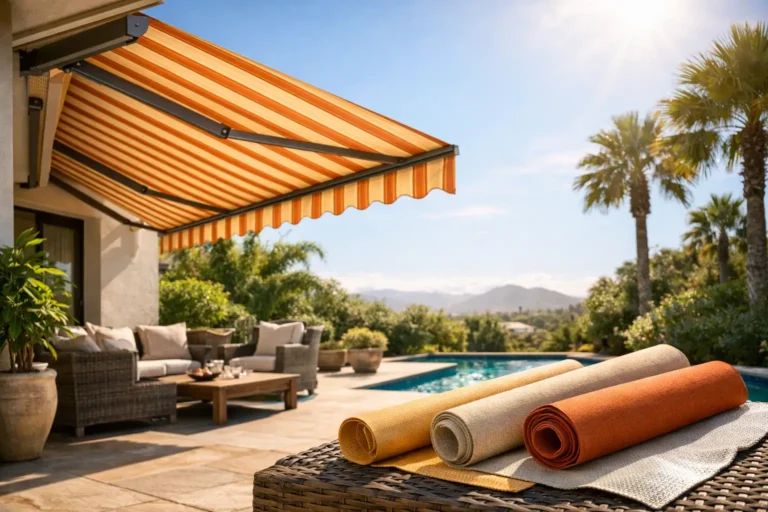
Retractable awnings are a practical choice for restaurants, storefronts, clubhouses, and covered walkways where shade is needed close to a building. They extend from the wall to cover outdoor seating, entry areas, or windows, then retract when sunlight is welcome or severe weather is approaching.
For a restaurant patio, a motorized retractable awning can make the difference between usable lunch seating and a row of empty sun-facing tables. It also creates a cleaner look than a permanent roofline while giving operators day-to-day control. Add an optional wind sensor, and the awning can retract automatically when conditions become too strong.
The trade-off is placement. Awnings need a suitable mounting surface and are best for areas directly adjacent to a building. They do not solve shade needs in the center of a large lawn, pool deck, or open courtyard.
Freestanding umbrellas
Commercial umbrellas are familiar for good reason. They bring targeted shade to dining tables, lounge chairs, poolside seating, and rooftop spaces without requiring a wall or permanent overhead structure. Center-pole models work well with tables, while cantilever umbrellas place the support pole off to the side for a more open seating layout.
Umbrellas are especially useful when a business needs flexibility. A hospitality property can rearrange its pool furniture, adjust its event layout, or close individual umbrellas as the sun moves. They are also an approachable option for smaller patios that need immediate comfort without major construction.
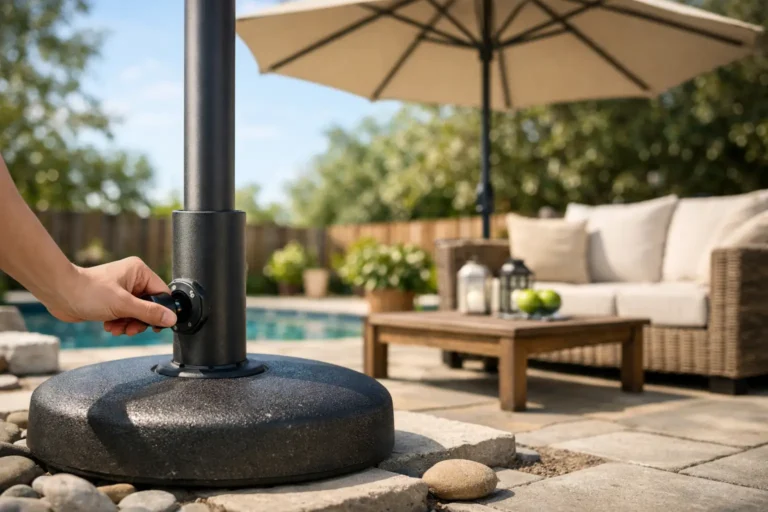
Not every umbrella is built for commercial use. Large canopies need a properly sized base or in-ground mount, and wind exposure should be considered before selecting a model. For exposed locations, a heavier-duty frame and professional anchoring are worth the investment.
Shade sails
Shade sails use tensioned fabric stretched between posts, building attachment points, or other engineered supports. Their angled lines and sculptural shape make them a natural fit for playgrounds, courtyards, pool areas, school grounds, and contemporary hospitality settings.
A well-planned sail layout can cover a broad area without making it feel enclosed. Because sails can be installed at different heights and angles, they create visual interest while helping block high summer sun. They are often chosen when a property wants shade that feels architectural but less formal than a solid roof.
Planning matters more with sails than many buyers expect. The fabric, attachment hardware, support posts, drainage angle, and tension all affect performance. They are generally designed for a defined coverage area rather than constant adjustment, so they work best when the furniture layout and sun exposure are fairly predictable.
Pergola shade canopies and louvered roofs
Pergolas create a destination within a larger outdoor space. They can define a dining terrace, outdoor bar, hotel lounge, rooftop gathering area, or residential clubhouse without closing it off from the surrounding view.
A pergola with a retractable canopy offers adjustable overhead coverage. Open the fabric for daylight and sky views, then extend it as the sun intensifies. Louvered roof systems provide another level of control, with rotating slats that can shift from open shade to more complete overhead coverage.
These systems make sense when shade is part of the property design, not just an add-on. They can be a strong choice for premium dining and hospitality areas because they frame the experience as much as they protect it. However, they require more planning, a stable installation surface, and a budget that reflects their structure and finish options.
Fixed canopies and fabric structures
Fixed canopies provide dependable shade in areas that need coverage every day. Common examples include entrance canopies, drive-through covers, walkway structures, bleacher shade, and fixed fabric roofs over dining or recreation areas.
Unlike retractable products, fixed systems do not need to be opened, closed, or monitored. That can be a major advantage for schools, municipal sites, medical facilities, and high-traffic commercial properties where consistent coverage matters more than flexibility.
The limitation is obvious: the shade remains in place year-round. This makes design, orientation, and drainage especially important. A fixed canopy should be sized and positioned to support the space in every season, not only during the hottest part of the day.
Exterior solar screens and drop shades
Exterior solar screens are designed to block glare and heat at the edge of a covered area. They are often installed on patios, pergolas, restaurant openings, cabanas, porches, and storefronts. Depending on the fabric openness, they can soften direct sun while preserving a degree of outward visibility.
These screens are valuable when overhead shade alone is not enough. Late-day sun often comes in at an angle, reaching under awnings and pergola roofs. A drop shade can create a more comfortable dining zone, protect guests from glare, and add a sense of privacy without building a permanent wall.
Screens should be selected with wind and operating needs in mind. Guided systems offer more stability than a free-hanging shade, while motorized controls make large or frequently used openings easier for staff to manage.
Choose Shade by How the Space Is Used
The most successful commercial shade plans start with the activity beneath them. A dining patio needs enough clearance for servers and guests, with shade coverage that reaches tables during peak service hours. A pool deck may need movable umbrellas for lounge chairs, plus a larger fixed or freestanding structure for a bar or family seating area.
For retail and service businesses, shade can also improve the customer experience before someone enters the building. A retractable awning over a storefront can reduce window glare, add curb appeal, and make an entrance more welcoming. For waiting areas, a fixed canopy may be the better fit because it offers predictable coverage without daily adjustment.
Think about where the sun is at the times people use the space most. Midday sun is only part of the picture. West-facing patios often need help in the late afternoon, when glare and heat can be more disruptive than overhead sun. In that setting, combining a retractable awning or pergola roof with an exterior screen can be more effective than relying on one product alone.
Factors That Affect the Right System
Before choosing among commercial shading system types, consider the site conditions as closely as the product style. Wind is a central concern for coastal properties, rooftops, open parking areas, and tall buildings. Local permitting, mounting surfaces, drainage, and access to electrical power can also shape the available options.
Fabric selection deserves attention too. Commercial-grade outdoor fabrics are made to handle sun exposure and help deliver meaningful UV protection, but colors and weave styles influence the experience. Darker fabrics may provide a clearer outward view through a screen, while lighter colors can create a brighter feel underneath. Solid canopies offer more complete shade; open-weave solar screens preserve more light and visibility.
Aesthetic coordination should not be treated as an afterthought. Frame finishes, canopy colors, and structural scale should support the architecture and furnishings already in place. A shade system is highly visible, especially in hospitality settings, so it should look intentional from inside and outside the property.
Make Commercial Shade Easier to Manage
For larger properties, operational simplicity is part of the value. Motorization can help staff adjust awnings, screens, and canopy systems without manually operating multiple units. Sensors can add another layer of convenience by responding to sun or wind conditions, though settings should always reflect the site and product requirements.
Commercial buyers, designers, and dealers also benefit from working from a clear product plan. Standardizing frame colors, fabric families, and sizing across several locations can simplify purchasing while maintaining a consistent guest experience. With more than 30 years of shade expertise, Simpli Shaded understands that a successful project needs both a strong finished look and a product plan that is realistic to install and maintain.
Start with the area your customers notice first: the hottest dining table, the unprotected entry, or the poolside seats that stay empty after noon. Improving that one space with the right shade can change how the entire property feels.