A patio that is too hot at lunch, a pool deck with nowhere to retreat, or a restaurant terrace that empties when the sun shifts all have the same problem: the outdoor space is not usable for enough of the day. Outdoor shade wholesale gives homeowners, dealers, designers, and commercial buyers a practical way to solve that problem with coordinated products, dependable availability, and a clearer path to the right fit.
Shade is more than a finishing touch. The right awning, umbrella, shade sail, or exterior screen helps manage glare, reduce direct UV exposure, protect furnishings, and make an outdoor destination feel intentionally designed. Buying at wholesale can make sense when a project involves multiple areas, repeat installations, or a business that needs a reliable product assortment rather than a one-off purchase.
What Outdoor Shade Wholesale Should Deliver
Wholesale buying is not simply about getting the lowest unit price. For a dealer or hospitality buyer, the real value is being able to source products that are consistent, presentable, and suited to the environments where customers will use them. For homeowners working through an authorized dealer, it can mean access to a more considered range of exterior shade solutions and support that goes beyond a boxed product.
A strong wholesale program should make selection easier. That starts with a well-organized catalog: clear product categories, usable dimensions, fabric and frame options, and a straightforward understanding of what is appropriate for a deck, patio, poolside setting, storefront, or dining terrace. It should also support controlled pricing and dependable product standards, which help dealers represent the collection with confidence.
At Simpli Shaded, more than 30 years of industry experience informs a simple goal: helping people create outdoor areas they will genuinely enjoy using. That means focusing on comfort, durability, UV protection, and a finished look that complements the property.
Start With How the Space Is Used
Before comparing styles, consider what the shade needs to accomplish. A homeowner may want a cooler place for weekend meals and afternoon reading. A hotel may need flexible coverage for lounge seating without blocking a view. A restaurant may need to cover tables during its busiest service hours while maintaining a polished streetside appearance.
The direction of the sun matters as much as the size of the area. West-facing patios often need more protection from low, intense late-day sun than a covered porch that receives mostly overhead light. A freestanding shade solution can be useful where there is no wall for mounting, while a retractable awning is often a natural choice for a patio directly outside the home.
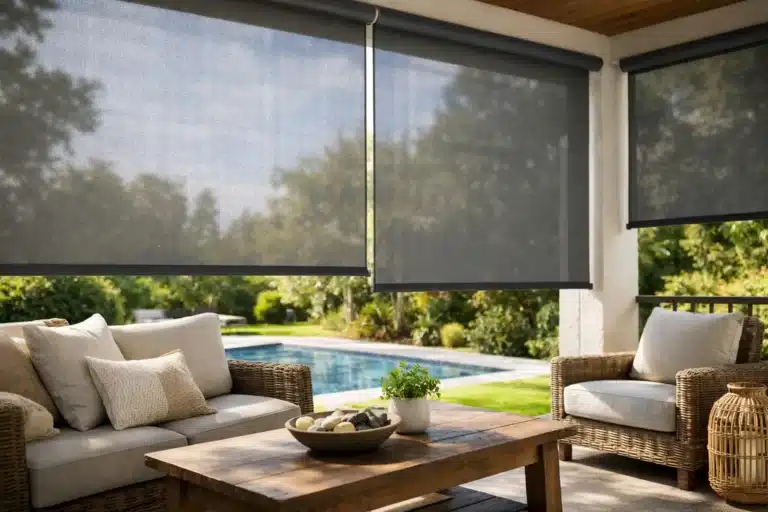
It also helps to define whether the priority is broad coverage, adjustable coverage, or vertical sun control. Overhead shade addresses the heat and glare coming from above. Exterior screens and side shades can improve comfort when the sun is lower or when privacy is part of the plan. Many larger projects use both, creating a more complete outdoor room rather than a single shaded spot.
Fixed, Retractable, and Freestanding Options
Fixed structures provide consistent coverage and a strong architectural presence. They can be a good fit when the shaded zone will not change and the property has a clear long-term layout. The trade-off is that fixed coverage does not retract when the homeowners want open sky or when a commercial venue needs to reset the look of a space.
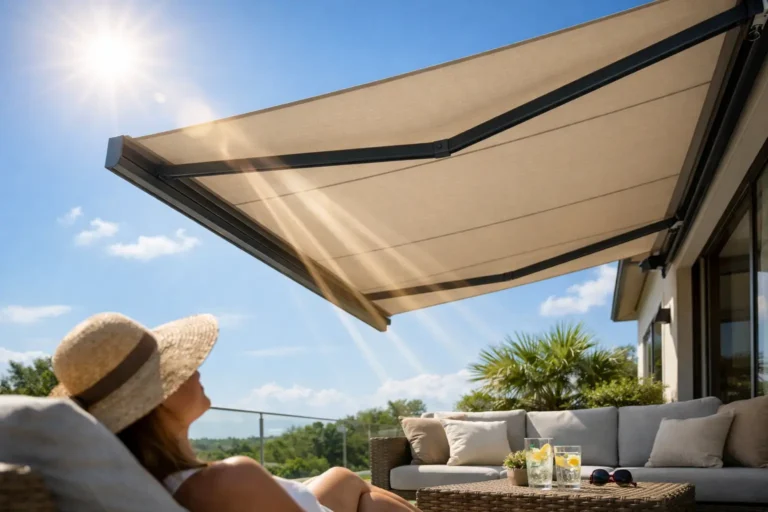
Retractable awnings offer more flexibility. With motorized operation, coverage can be extended for a sunny afternoon and retracted when the weather is mild or the stars are out. They are especially appealing for patios and decks because they add shade without requiring permanent posts in the seating area. Installation requirements, wall condition, projection, and wind exposure still need careful review.
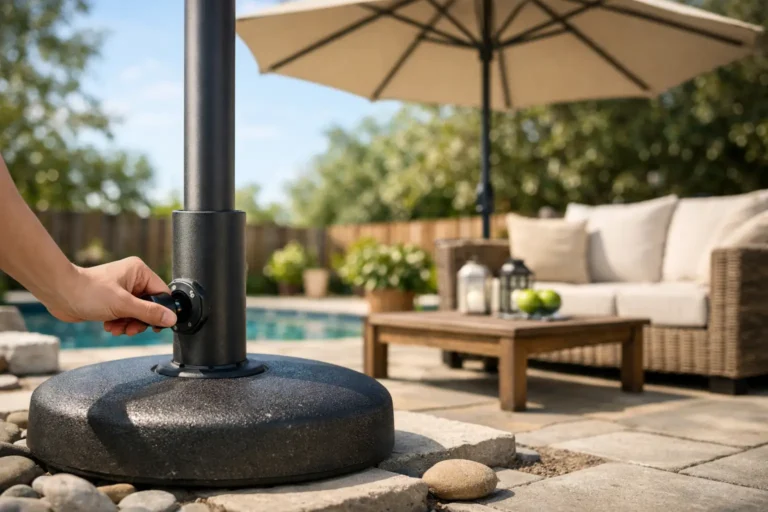
Freestanding umbrellas and cantilever styles are useful for pool decks, garden seating, outdoor dining areas, and other layouts where shade needs to move with the furniture. They can be easier to reposition, but base weight and wind management are essential. A light base or poorly secured umbrella may be convenient until a gust turns it into a safety concern.
Look Beyond Size and Color
Dimensions are critical, but they do not tell the whole story. A canopy that appears large enough on paper may not protect the seating area once the sun sits at an angle. Consider the path of the sun during the hours the space is busiest, then plan coverage around the actual activity zone, not just the footprint of a table or sofa.
Fabric selection affects comfort, appearance, and maintenance. Exterior-rated fabrics are designed to stand up to sun exposure and normal outdoor conditions, but every material has different performance characteristics. Darker colors may reduce glare more effectively, while lighter colors can create a brighter feeling underneath. Pattern and texture can help tie the shade system to cushions, siding, stone, or commercial branding.
Frame finish matters as well. A neutral frame can blend into an existing exterior, while a contrast finish can make the shade product a deliberate design feature. For commercial spaces, choosing a repeatable finish and fabric palette helps maintain a consistent look as additional areas are added later.
Wind is another factor that should never be treated as an afterthought. No shade product is meant to remain deployed in every weather condition. The right solution depends on local exposure, mounting conditions, intended use, and the ability to retract, close, or secure the product when winds increase. Clear operating guidance is part of a good customer experience.
A Smarter Buying Process for Dealers and Trade Buyers
For dealers, designers, and outdoor furniture retailers, an outdoor shade wholesale relationship should simplify selling rather than create more questions. A limited but well-defined assortment is often more useful than an overwhelming catalog filled with near-duplicate choices. It allows sales teams to guide customers toward solutions that fit common patio, deck, pool, and hospitality applications.
Reliable specifications and straightforward ordering support matter because shade products are often part of a larger project. A designer may be coordinating furniture, hardscape, lighting, and exterior finishes. A contractor may need product details before preparing a mounting surface. A hospitality operator may be planning around opening dates and service schedules. Clear information helps each party make decisions earlier and avoid expensive changes later.
Pricing structure also deserves attention. Controlled brand pricing protects the value of the product, supports dealer margins, and gives customers a more consistent shopping experience. It prevents a race to the bottom that can leave buyers with little guidance after the sale. The best wholesale partnerships balance competitive value with product knowledge, service, and a dependable path for future orders.
Plan for Installation Before Ordering
Even a well-chosen shade product can disappoint if it is installed in the wrong location or without the needed support. Measure carefully, account for doors and windows, and confirm clearance for operation. For retractable models, consider how far the shade projects when extended and where it will sit when closed.
For commercial projects, confirm property requirements and local rules early. Building management, signage policies, historic districts, permits, and accessibility considerations can shape the final selection. This is not about making the process complicated. It is about addressing the practical details before a product arrives on-site.
Professional installation may be the right choice for wall-mounted and motorized products, particularly when structural mounting, electrical work, or precise alignment is involved. Freestanding products can be simpler, but they still require correct assembly and secure anchoring or weighting.
Choose Shade That Supports the Experience
The strongest outdoor spaces give people a reason to stay. They feel cooler at midday, easier on the eyes, and more comfortable for a meal, conversation, or quiet hour outside. Whether the project is one backyard patio or a collection of hospitality terraces, the best shade choice is the one that works with the space, the weather, and the way people actually gather there.
Start with the sun, choose a solution that fits the layout, and give durability as much consideration as style. That approach turns outdoor shade from an accessory into a practical investment in a more inviting, usable place to be.